Pillar Guide
Water Damage Cleanup & Drying: A Step-by-Step Guide
How to clean up water damage and dry your home the right way: removing standing water, drying the structure within the mold window, disinfecting, and deciding what to salvage — synthesized from FEMA, EPA and IICRC S500 guidance.
Reviewed against current FEMA, EPA and IICRC S500 guidance.
Cleaning up water damage is a race against the clock: the faster you remove the water and dry the structure, the more of your home you save. This hub lays out the full cleanup sequence — remove, dry, disinfect, decide — and links to the detailed guide for each step. It builds on the master guide, what to do when your house floods.
Step 1 — Remove the standing water
You can’t dry a structure that’s still underwater. Use a submersible pump for deep water and a wet/dry vacuum for the rest. Work from the lowest point and don’t pump a flooded basement down too fast if the surrounding ground is still saturated, which can stress the walls.
Full method: how to remove standing water from your home.
Step 2 — Dry out the structure, fast
This is where most cleanups succeed or fail. Mold can begin within 24 to 48 hours, so getting air moving and humidity down is urgent.
- Open windows when outdoor air is drier than indoor air.
- Run fans pointed across — not just at — wet surfaces.
- Run dehumidifiers continuously and empty or drain them.
- Pull baseboards and lift carpet edges so wall cavities and subfloors can dry.
The complete drying playbook, with timelines, is how to dry out a flooded house. For why speed matters, see how long does it take mold to grow.
Source: EPA — MoldStep 3 — Clean and disinfect
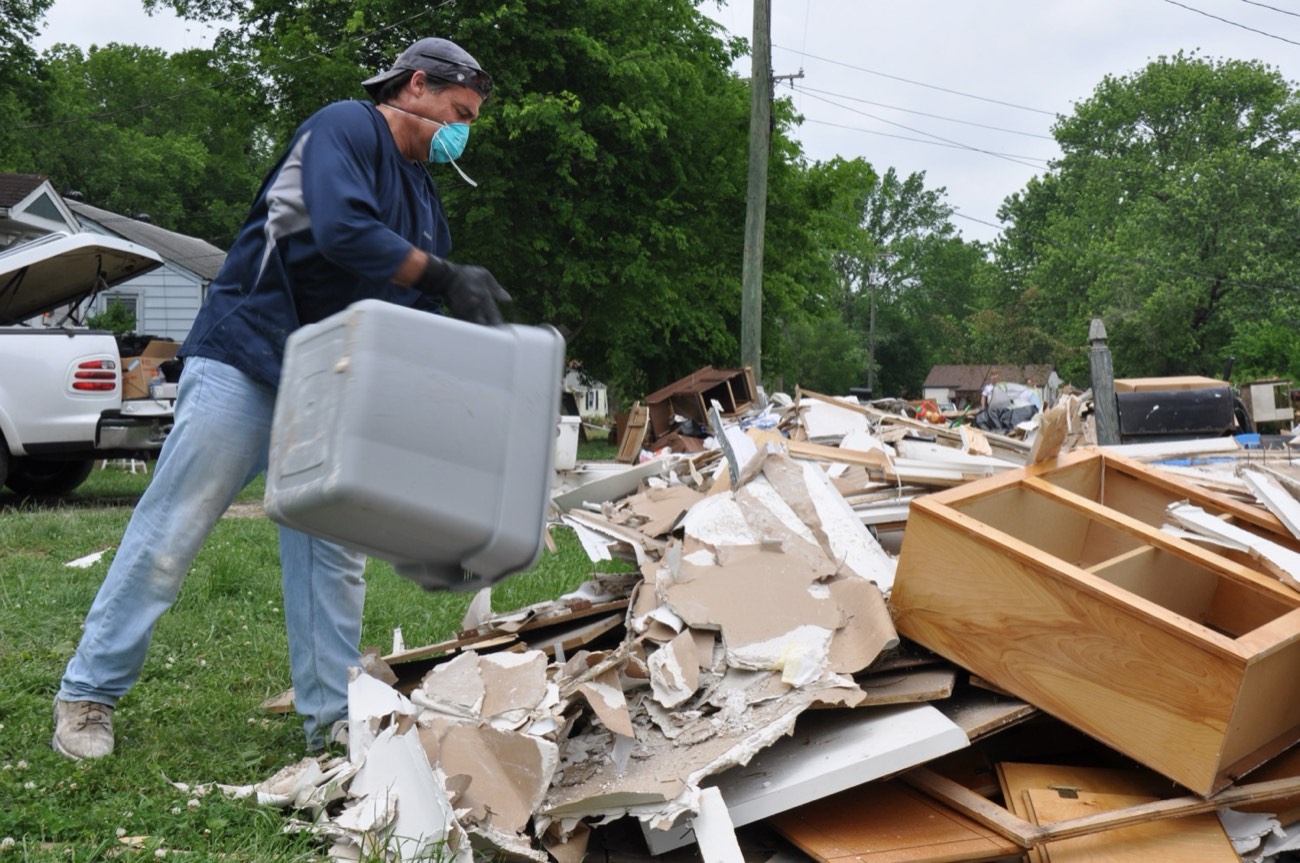
Once materials are dry, clean hard surfaces and disinfect — this matters most when the water was gray or black. Wear protective gear for contaminated water. See how to clean and disinfect after a flood and protective gear for flood cleanup.
Source: CDC — Flood Cleanup SafetyStep 4 — Salvage or remove materials
Some materials dry and recover; others must go.
- Carpet: clean water caught fast may be salvageable; contaminated or long-soaked carpet usually isn’t. See can water-damaged carpet be saved.
- Drywall: may be dried if caught early, but saturated sections are often removed. See water-damaged drywall: when to dry, when to remove.
- Hardwood floors: act fast to prevent cupping and buckling. See how to dry wet hardwood floors.
When to call a professional
Be honest about scope. A few square feet of clean water is a weekend job; a flooded basement of contaminated water inside finished walls is not. Our decision guide is do you need a professional or can you DIY water cleanup.
Guides in this hub
- How to remove standing water
- How to dry out a flooded house
- How to clean and disinfect after a flood
- Can water-damaged carpet be saved?
- Water-damaged drywall: when to dry, when to remove
- How to dry wet hardwood floors
- Categories of water damage explained
- DIY vs. professional water cleanup