Cleanup & Drying
Water-Damaged Drywall: When to Dry vs. When to Remove
Water-damaged drywall guide: signs of damage, when wet drywall can be dried in place vs. cut out, flood cut depth, mold risk, and drying timeline.
Reviewed against current FEMA, EPA and IICRC S500 guidance.
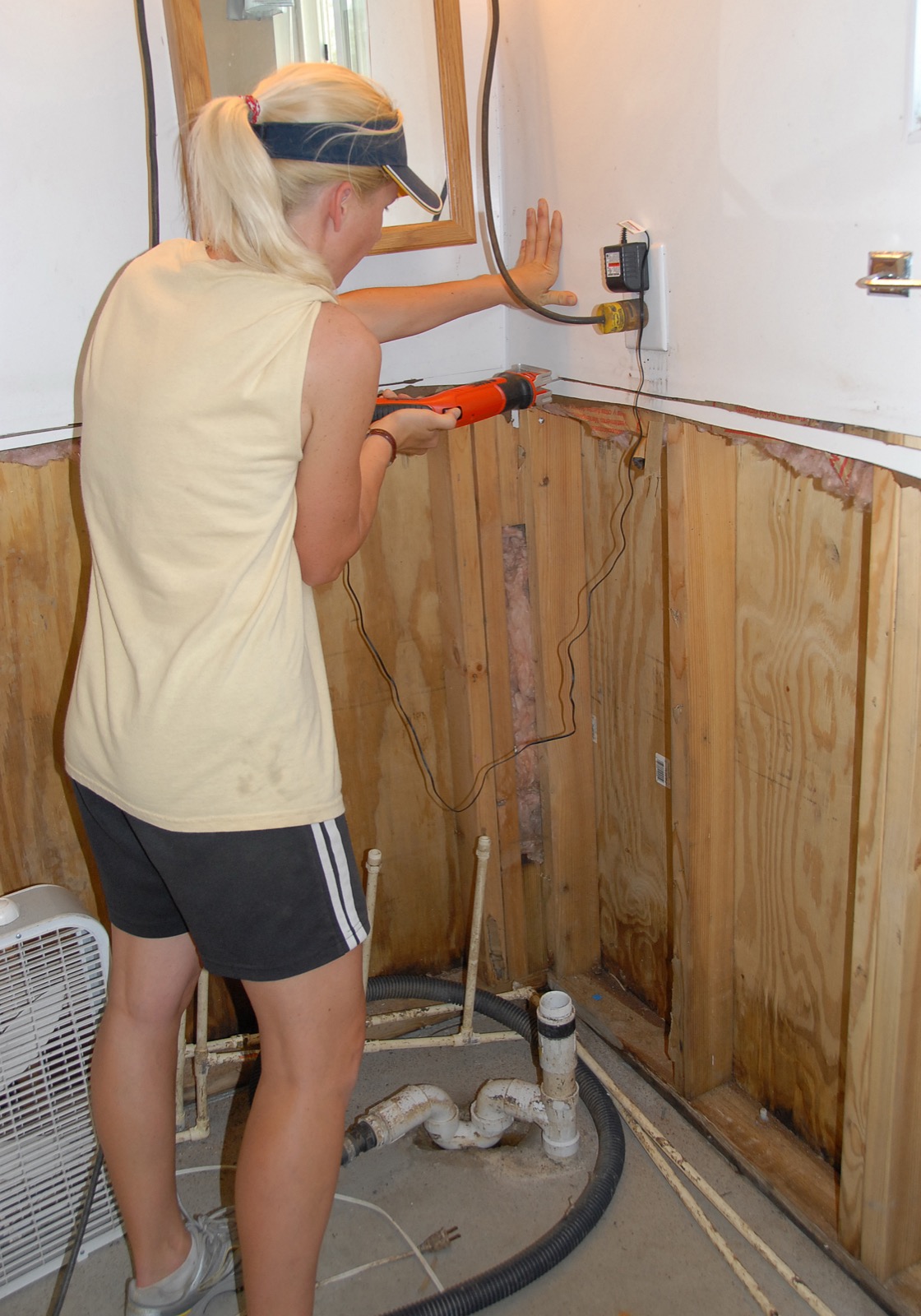
Water damaged drywall is one of the most common and consequential decisions after any flooding event. Get it right and you pay for drywall repair. Get it wrong and you pay for mold remediation six months later — a job that runs three to five times more. This guide covers what the FEMA, EPA, and IICRC S500 standard say, translated into a decision you can make on the day.
What Does Water Do to Drywall?
Drywall — also called gypsum board or sheetrock — is composed of a gypsum plaster core sandwiched between two layers of paper. That paper facing is what holds the panel together, and it is also what fails first when water arrives.
Water penetrates drywall quickly. Gypsum is porous and wicks moisture both through the face and upward by capillary action inside the wall cavity. A waterline at baseboard level can saturate drywall 12 to 18 inches above the actual flood mark within hours — which is why cutting exactly at the visible waterline always leaves wet material behind.
Once saturated, the gypsum core swells and softens. The paper facing separates from the core, bubbles, or delaminates. Paint blisters. The structural integrity of the panel is gone even if the surface eventually dries — a dried-out saturated panel is brittle and prone to crumbling. In most cases, drywall that was fully saturated does not restore to usable condition.
The second threat is biological. The paper facing and the gypsum dust trapped inside are both organic substrates. Combined with moisture, they support mold growth within 24 to 48 hours — a threshold cited by both FEMA and the EPA’s mold cleanup guidance.
How Can You Tell Drywall Has Water Damage?
Some signs are obvious. Others hide behind intact paint until the mold is already established.
Visible signs to check:
- Soft, spongy, or crumbling areas when you press the wall surface
- Swelling, warping, or a visible bow in the panel
- Bubbling, peeling, or blistering paint — paint can trap moisture underneath and look intact for days
- Discoloration or water stains: tan, brown, or yellow rings on the surface
- Dark spotting along the bottom of walls or around electrical outlets (mold beginning)
- A persistent musty odor in the room even after the standing water is gone
Hidden damage is common because water travels inside wall cavities before it shows on the face. If you had standing water at baseboard level, assume the drywall is wet to at least 12 inches above that mark, even if the surface looks dry. A non-invasive moisture meter set against the wall face will confirm — anything reading above 16 percent moisture content in gypsum indicates wet material.
Outlets and switch plates are a useful tell: if a receptacle plate shows rust staining or the plastic has swollen in its box, water reached that height inside the wall.
Does Water-Damaged Drywall Need to Be Removed?
The answer depends on three factors: the category of water damage, how long the material has been wet, and whether mold is visible.
| Factor | Remove | Dry in Place |
|---|---|---|
| Water category | Category 2 (gray) or Category 3 (black/flood) | Category 1 (clean supply water, rainwater) only |
| Time wet | Longer than 48 hours | Fewer than 48 hours, drying started immediately |
| Saturation extent | Full-thickness saturation, panel swollen/delaminated | Surface wetting only, gypsum core not saturated |
| Mold visible | Yes — any visible mold = remove | No visible mold, no musty odor |
Category 1 only — and only fast. The IICRC S500 standard, which is the professional baseline for water damage restoration, permits drying drywall in place only when the water source was Category 1 (clean water from a supply line, a roof leak without contamination, or similar) and the drying process begins within 48 hours. Even then, the wall cavity must be opened — or at minimum the baseboard removed — to allow airflow behind the panel.
Category 2 or 3 — always remove. Gray water (appliance discharge, toilet overflow without solids) and black water (sewage, storm floodwater, backed-up drains) carry microbial contamination. The IICRC S500 is clear: porous materials that contacted Category 2 or 3 water cannot be adequately decontaminated and must be removed. Source: IICRC — S500 Standard
When in doubt, cut. A sheet of drywall and its labor to install costs a few hundred dollars. Mold remediation in a wall cavity costs several thousand and may require the same removal work anyway — plus testing, containment, and post-remediation clearance.
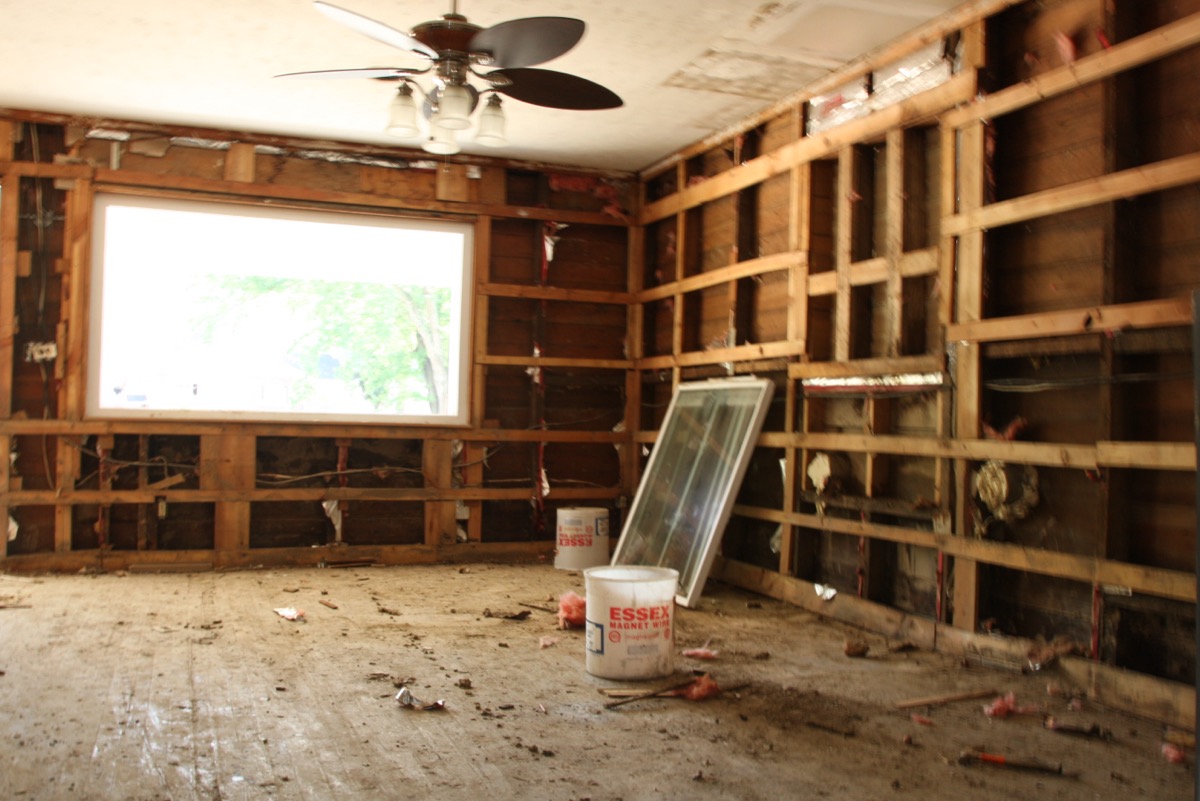
How Long Does It Take Wet Drywall to Dry?
Drying time depends on whether the wall cavity is open, air movement, ambient humidity, and how saturated the material became. Under professional drying conditions — air movers directed at the wall surface and a dehumidifier maintaining below 50 percent relative humidity — these are typical ranges:
Surface-dry is not the same as structurally dry. The most common mistake homeowners make is closing a wall back up when the surface no longer feels damp. Moisture meters confirm what hands cannot: the gypsum core and the framing behind it may still read 20 to 30 percent moisture content while the face is touch-dry.
Professional restorers take daily moisture readings and do not close walls until the drywall core and adjacent framing reach the dry standard (typically at or below 16 percent for gypsum, at or below 19 percent for wood framing, per IICRC S500). Closing wet walls traps moisture and guarantees mold. For the full process of drying a structure after flooding, see how to dry out a flooded house.
How Deep Should You Cut Water-Damaged Drywall?
The “flood cut” is a horizontal cut made across the wall at a fixed height above the waterline. Its purpose is to expose the wall cavity for drying, inspection of framing, and removal of saturated insulation.
Standard flood cut depths:
- 12–24 inches above the visible watermark — the minimum to account for upward wicking inside the cavity
- 4 feet off the floor — preferred when the waterline was below 2.5 feet; cutting at 4 feet allows the lower half of a standard 4x8 sheet to be removed cleanly and replaced without leaving a narrow strip
Never cut at the waterline. Water travels upward inside wall cavities by capillary action. A cut exactly at the stain line almost always leaves wet framing and wet insulation behind the retained upper panel — which then molds from the inside.
After the flood cut, probe the exposed cavity with a moisture meter. If the framing reads above 19 percent, extend the cut higher. If the cavity insulation is wet, remove all of it — wet insulation is not salvageable and holds moisture against the wood indefinitely. See wet drywall — remove or dry in place for a more detailed step-by-step on the cut-and-expose process.
Will Water-Damaged Drywall Grow Mold?
Yes — if it stays wet long enough. Both FEMA and the EPA note that mold can begin growing on wet building materials within 24 to 48 hours of initial wetting. Drywall is a particularly susceptible substrate because its paper facing is an organic food source and its gypsum core holds moisture in a stable environment for mold colonization. Source: EPA — Mold Cleanup in Your Home
What mold looks like on drywall:
- Gray, black, or green spotting on the paper face — often starting at seams, corners, or behind baseboards
- Fuzzy or powdery texture on the surface
- Dark staining that doesn’t wipe clean
- Musty, earthy odor even after the room has been aired out
Mold on drywall is not always visible from the room side. It can colonize the back of the panel — the side facing the wall cavity — while the room-facing surface looks clean. If drywall was wet for more than 48 hours and you’re not cutting it out, at minimum remove the baseboard and inspect the back of the panel through the gap.
The health implications of living in a space with mold-colonized walls are well-documented. The CDC’s flood guidance recommends removing and discarding drywall and insulation that cannot be dried within the 48-hour window, rather than attempting to clean or encapsulate it in place. For a full picture of what happens after the 48-hour mark, see mold after water damage.
When to Call a Professional
Some situations call for professional water damage restoration — not because the work is physically impossible to DIY, but because the risks of an incomplete job are high enough to justify the cost.
Call a professional when:
- The water source was Category 2 or 3 (gray water, sewage, or outdoor floodwater)
- The affected area exceeds 10 square feet of wet drywall — the EPA’s threshold beyond which professional mold remediation is recommended
- You find mold already growing — visible mold on drywall is a remediation job, not a cleaning job
- The flooding involved wall cavities you cannot fully access (behind tubs, built-in cabinetry, stairwells)
- Your home has HVAC ducts running through the affected walls — contamination spreads through ductwork
- You have health conditions (asthma, compromised immunity) that make mold exposure higher risk
What a professional brings: industrial air movers and dehumidifiers that reduce drying time dramatically, moisture meters to confirm dry-standard in framing and concrete, and thermal imaging cameras that locate hidden wet areas behind intact surfaces. They also document the scope for your insurance claim — which matters because DIY vs. professional water cleanup is often decided by whether your insurer requires a licensed contractor for the claim to pay.
For smaller clean-water events caught quickly, careful DIY is reasonable. For anything that has been wet more than a day, involved contaminated water, or has visible mold, the calculus shifts strongly toward professional help.