Cleanup & Drying
Toilet Overflow Cleanup: Stop It and Clean It Safely
Toilet overflow cleanup: shut off the water, know when it turns to sewage, and disinfect the floor safely.
Reviewed against current CDC, EPA, OSHA and IICRC S500 guidance.
Toilet overflow cleanup starts before you touch a mop: shut off the water at the valve behind the toilet, figure out whether the water is clean or contaminated, then remove it and disinfect. Clean tank overflows just need mopping and drying. Anything that backed up from the drain is treated as sewage — gloves, an EPA-registered disinfectant, and no shortcuts.
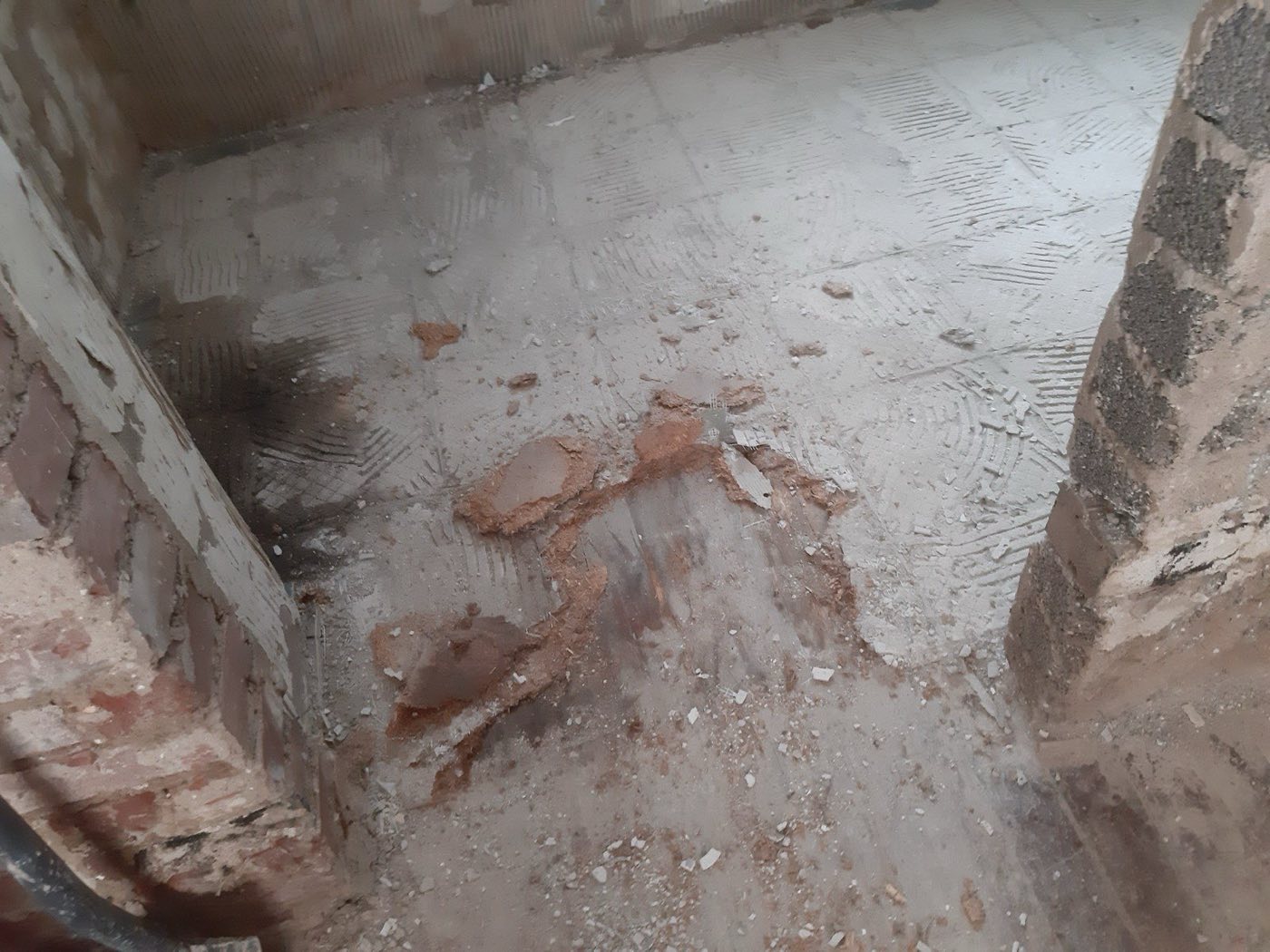
How do you stop a toilet from overflowing right now?
Every second the toilet keeps running adds more water to the floor, so stopping the source comes before any cleanup step. Look behind or beside the base of the toilet for a small oval handle on the water line — that’s the supply valve. Turn it clockwise until it stops. This cuts off the tank’s water supply instantly, whether the overflow is from a clog or a mechanical failure inside the tank.
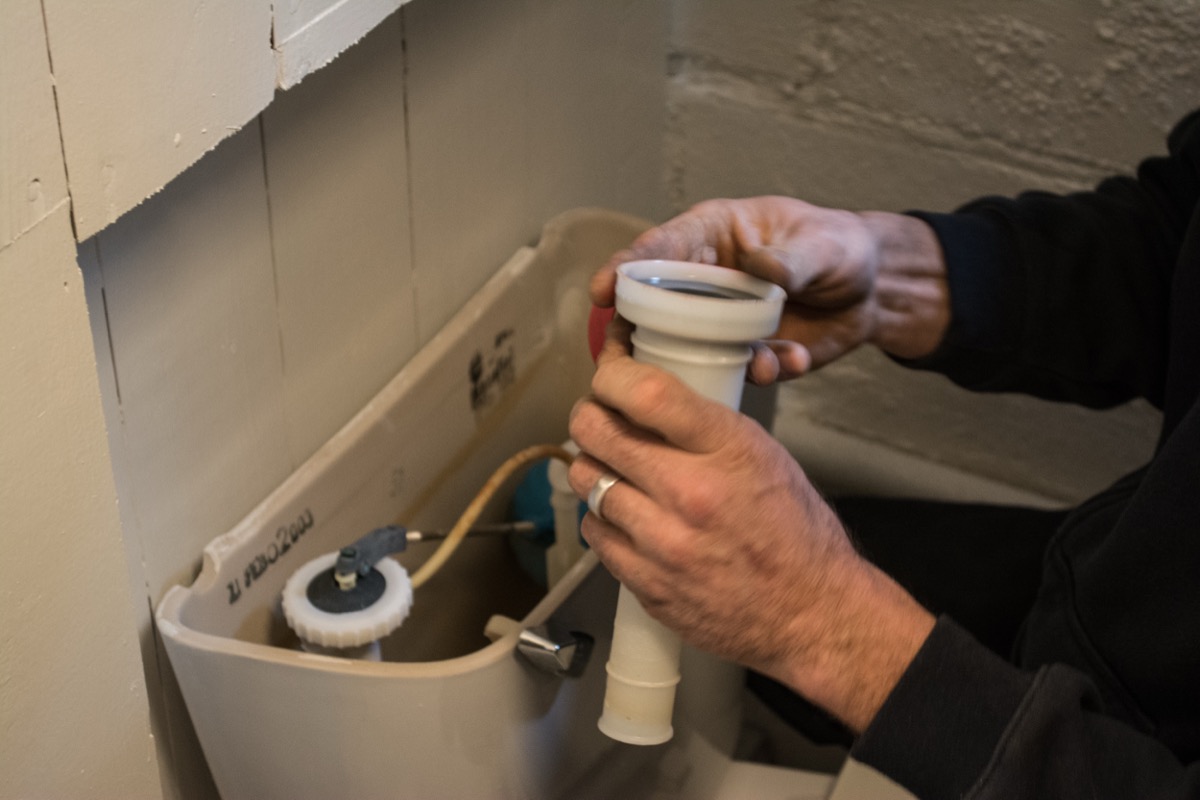
If you can’t find the valve or it’s stuck, take the lid off the tank. Push the flapper down to stop water from flowing into the bowl, or lift the float so the fill valve reads the tank as full and stops running. Either move buys you the same result: no more water reaching the bowl.
Once the water’s off, don’t reach for the plunger yet. Let the bowl level settle first — plunging while the tank is still refilling just pushes more water onto the floor with each stroke.
Is toilet overflow water always contaminated?
No, and this is the decision that shapes everything after it. There are two very different overflows that look identical on the floor.
- Clean overflow (Category 1): the tank kept refilling because of a stuck float or fill valve, and clean supply water ran over the rim. Low risk — mop, dry, done.
- Sewage backup (Category 2 or 3): the bowl backed up from the drain side because of a clog downstream, and what’s on the floor came out of the pipe, not the tank. Treat it as contaminated.
The IICRC S500 standard, the restoration industry’s reference for water categories, is explicit that when the source is uncertain, professionals default to the more contaminated category rather than assume the best case. Do the same at home: if you didn’t watch it happen and can’t be sure it was a clean tank overflow, clean up as if it’s sewage.
Source: CDC — Floodwater Safety GuidelinesA backed-up toilet overflow can carry bacteria, viruses, and parasites from the wastewater system. The full breakdown of clean, gray, and black water is in the categories of water damage explained — worth a read if this is your first time sorting out what you’re dealing with.
What do you need before you start cleaning?
Gather these before you touch the water, especially if there’s any chance it’s contaminated:
| Item | Why |
|---|---|
| Rubber gloves | Bare hands should never touch sewage-contaminated water |
| N95 respirator or better | Blocks airborne bacteria and mold spores you’d otherwise breathe in |
| Old towels or a wet/dry shop vac | Pulls up standing water fast |
| Detergent + hot water | Breaks down organic material before disinfecting |
| EPA-registered disinfectant | The step that actually kills what’s left behind |
| Trash bags | For anything porous that touched contaminated water |
Skip the boots-and-gloves step and you’re the one at risk, not the floor. OSHA lists standing water contaminated by sewage as a direct exposure hazard, not a minor inconvenience.
How do you clean up a toilet overflow: step by step
- Shut off the water at the supply valve or the tank, as covered above.
- Gear up — gloves and an N95 respirator if there’s any chance the water is contaminated.
- Soak up standing water with old towels, or pull it up faster with a wet/dry vac rated for liquids.
- Clear the clog once the water’s off and the bowl has stabilized — plunge, or use a toilet auger for a stubborn blockage.
- Wash the floor with hot water and detergent, working into grout lines and the base of the toilet where water pools.
- Disinfect with an EPA-registered product, applied after cleaning and left wet for the label’s full contact time.
- Bag and discard any porous items — bath mats, towels left on the floor, toilet paper — that touched contaminated water.
- Dry the area completely with a fan or open window; damp grout and baseboards left alone invite mold within days.
How do you disinfect a floor after a toilet overflow?
Cleaning and disinfecting are two different steps, and skipping the order defeats the point of both. Detergent and hot water go first — they physically remove the organic material that shields bacteria from disinfectant. Only after that layer is gone does the disinfectant reach what’s left and actually kill it.
Apply an EPA-registered disinfectant labeled effective against bacteria and viruses, and let it sit wet on the surface for the full contact time listed on the label — commonly 5 to 10 minutes. Wiping it off early is one of the most common mistakes in this kind of cleanup; the product needs that dwell time to work, not just contact.
Source: EPA — Registered DisinfectantsPay particular attention to:
- Grout lines and tile seams, where contaminated water wicks in and a quick mop pass misses it.
- The base of the toilet and the floor bolts, a spot people routinely skip.
- Baseboards, which pull moisture up like a wick if they were touched by water.
What should you throw away, and what can you keep?
The material decides this, not how the item looks. Sewage-contaminated water soaks into porous materials in a way you can’t fully disinfect back out.
- Discard (Category 2/3 contact): bath mats, towels left on the floor, toilet paper, cardboard boxes, low-stored cosmetics or toiletries in absorbent packaging.
- Clean and keep: tile, sealed grout, the toilet itself, sealed cabinet fronts, and other hard non-porous surfaces — once washed and disinfected.
- Assess case by case: unsealed wood trim or a wood vanity base that got wet; if it stayed wet more than a day or the water was contaminated, treat it as a loss.
If the water reached carpet in an adjoining hallway or bedroom, that carpet and its padding fall under the same rule for contaminated water — see how to dry wet carpet for what’s salvageable when the source was clean instead.
What if the water reached the floor below?
A toilet overflow that runs long enough can soak through subfloor and show up as a stain or drip on the ceiling below. If you see water spotting, sagging, or dripping from a ceiling under the bathroom, stop cleaning the bathroom floor and address that first — a saturated ceiling can collapse. Shut off power to any light fixture in the affected ceiling area at the breaker rather than near the water, and see what to do about water leaking from a ceiling for the next steps.
When does a toilet overflow need a professional?
Most toilet overflows are a DIY job: shut off the water, clean, disinfect, done in under an hour. Call in help when:
- The clog won’t clear after plunging or augering, and the toilet keeps backing up — that’s a plumbing problem, not a cleanup problem.
- Contaminated water reached carpet, drywall, or subfloor beyond the bathroom tile.
- Water soaked through to the floor or ceiling below.
- The backup happened more than once in a short period, which often points to a clogged main line serving more than one fixture.
A plumber clears the actual blockage; a water damage restoration company handles extraction and drying if contaminated water got into porous building materials. For the broader question of when any water cleanup is beyond a DIY scope, see DIY vs. professional water cleanup.
Toilet overflow cleanup checklist
- Shut off the water at the supply valve, or the tank flapper if there’s no valve.
- Gear up with gloves and an N95 respirator for any suspected contamination.
- Remove standing water with towels or a wet/dry vac.
- Clear the clog with a plunger or auger once the water is off.
- Wash the floor and grout lines with hot water and detergent.
- Disinfect with an EPA-registered product; let it sit for the full label contact time.
- Bag and discard porous items that touched contaminated water.
- Dry the area fully with a fan or open window.
- Watch for a ceiling drip below the bathroom in the following days.
- Call a plumber if the clog won’t clear, or a restoration company if water reached building materials.
Stop the water, sort clean from contaminated, and clean in that order — that’s what keeps a toilet overflow a quick mop-up instead of a bigger repair.
Image credits: bathroom floor photo by GerritR, Wikimedia Commons, CC BY-SA 4.0. Toilet valve photo by Tim Evanson, Wikimedia Commons, CC BY-SA 2.0.