Cleanup & Drying
How to Get Water Out of Carpet (Dry Wet Carpet Before Mold Sets In)
How to get water out of carpet fast: extract standing water, pull the carpet back, remove the soaked pad, and dry the carpet and subfloor with air movers and a dehumidifier — all within the 24–48 hour mold window, with category-by-category save-or-replace rules.
Reviewed against current EPA, IICRC S500 and university extension guidance.
Knowing how to get water out of carpet quickly is the difference between saving the carpet and tearing out a moldy floor a week later. The job is straightforward but time-sensitive: extract the standing water, lift the carpet, pull the soaked pad, and dry both the carpet face and the floor beneath it. This guide walks the whole sequence in order, plus the save-or-replace rules for every layer — part of our larger water damage cleanup guide.
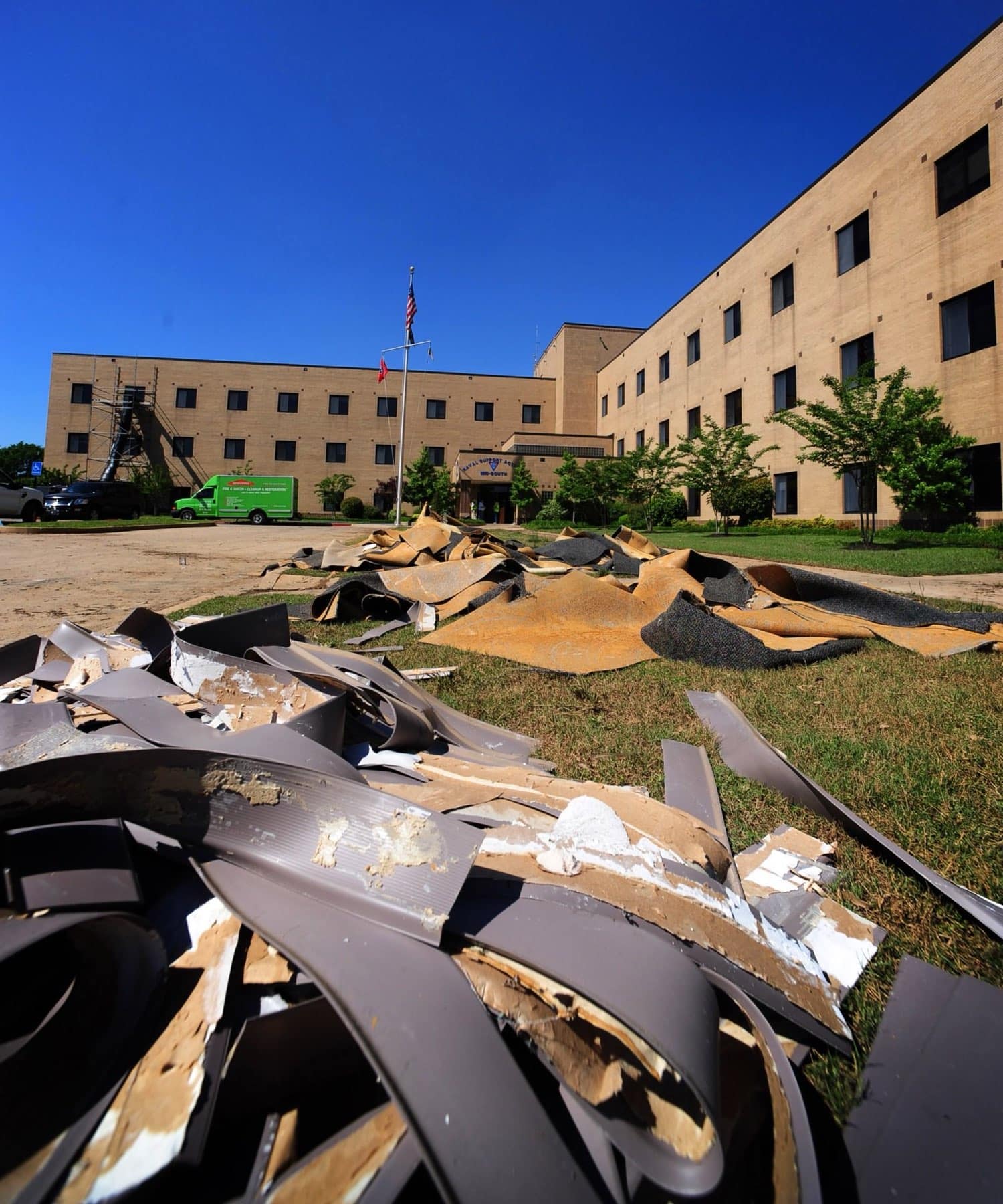
Before you start, confirm the area is electrically safe and identify the water source. Clean water from a supply line or rain is the only situation where drying carpet yourself makes sense. If the water is gray (appliance discharge) or black (sewage or storm floodwater), the rules change — see the categories of water damage before touching anything porous.
How long do you have to dry wet carpet?
You have 24 to 48 hours. That is the window in which mold begins to grow on damp materials, according to the EPA’s mold guidance, and it governs every decision below.
The U.S. EPA’s mold course is explicit that materials staying wet beyond 24–48 hours should be considered for removal if they can’t be fully dried, and recommends you “remove standing water and dry materials within 24 to 48 hours” to prevent mold growth. After that window, the question shifts from how do I dry this to do I need to throw it out.
Source: EPA — Mold Course, Chapter 4So the order of operations matters: extract, lift, and start air moving the same day. A carpet that sits wet overnight, then a second night, is a carpet you are probably replacing. The mold clock does not pause for the weekend.
How to get the water out, step by step
- Extract standing water with a wet/dry vacuum. Make slow, overlapping passes — pushing down lightly squeezes water out of the pile. Empty the tank often. A shop vac pulls far more water than blotting alone, and the EPA specifically recommends removing water with a wet vacuum so materials can dry within the 48-hour window.
- Pull the carpet back. Starting at a corner, lift the carpet off the tack strips along the walls and fold it back to expose the pad and subfloor. Wear gloves; tack strips have sharp nails.
- Remove the pad. The pad under the carpet is a dense foam or felt sponge that holds water against the floor. Cut it into manageable strips and bag it for disposal. (See the next section for when, rarely, you can keep it.)
- Extract and clean the subfloor. Vacuum any water off the exposed subfloor and wipe it down. This is the surface most likely to grow hidden mold.
- Set up drying equipment. Position air movers to sweep air across the carpet face and along the subfloor — not straight down at them — and run a dehumidifier in the closed room to pull the evaporated moisture out of the air. Some restorers “float” the carpet by aiming an air mover under the lifted edge so air circulates above and below.
- Run it around the clock until a moisture meter confirms both the carpet and the subfloor are dry. The full drying setup is covered in how to dry out a flooded house.
Can wet carpet be saved, or does it need to be replaced?
It depends almost entirely on which category of water soaked it and how fast you reacted.
| Component | Category 1 (clean water) | Category 2 (gray water) | Category 3 (black water) |
|---|---|---|---|
| Carpet face | Often savable if dried < 48h | Sometimes, after pro cleaning + disinfection | Remove & discard |
| Carpet pad | Replace (rarely dries in time) | Discard | Discard |
| Subfloor | Dry in place & verify | Clean, disinfect, dry, verify | May need removal if porous/OSB |
| Tack strip | Usually keep if dry | Replace if contaminated | Replace |
For clean water, fast action usually saves the carpet face and the subfloor, while the pad gets replaced. For gray water, the carpet may be salvageable only after thorough professional cleaning and disinfection. For black water — sewage or storm floodwater — the IICRC S500 restoration standard treats porous materials as contaminated: carpet and pad that contacted Category 3 water should be removed and discarded, not cleaned.
Source: IICRC — S500 Water Damage StandardsWhen the right answer is “remove and discard,” document it for your claim first — photos of the damage and the waterline. Our guide to what to salvage and what to throw away walks the keep-or-toss calls layer by layer.
Do you have to replace the carpet padding?
Almost always, yes. The pad is the part of the assembly that holds the most water and dries the slowest, which makes it the highest mold risk in the whole floor.
University extension guidance is clear: carpet pad is restorable only if it was clean water and you act within about 48 hours — otherwise it should be discarded. Pad that soaked up gray or black water is thrown away every time. Because new pad is cheap relative to the cost of a mold remediation, most homeowners and restorers simply replace it after any significant wetting.
How to dry carpet without pulling it up
For a small, clean-water spill caught immediately, you can sometimes skip the teardown:
- Extract aggressively with the wet/dry vac until no more water lifts.
- Blot the surface with clean towels, pressing down with body weight.
- Run an air mover across the surface and a dehumidifier in the closed room.
- Check the floor beneath a corner after a few hours — if the pad is still wet, you have to lift the carpet after all.
This shortcut only works when the wetting is minor, clean, and fresh. The moment the pad and subfloor are saturated, in-place drying fails: the surface feels dry while moisture sits underneath, exactly the condition that grows mold weeks later. When in doubt, lift it.
How to tell if water reached the subfloor
Surface dampness lies. The carpet pile can feel nearly dry while the pad and the floor below are soaked.
The reliable checks:
- Lift a corner and feel the pad and subfloor. A cold, spongy pad and a darkened, damp subfloor mean water got through.
- Use a moisture meter. Take a reading in a dry part of the same subfloor as your baseline, then compare the previously wet area. They should match before you stop.
- Watch for telltales later — a persistent musty smell, buckling, or staining means moisture stayed behind.
Do not relay the carpet until the subfloor reads fully dry against your baseline. University extension guidance warns against re-installing flooring over a subfloor that hasn’t dried out — you’d seal moisture in and guarantee mold. If the subfloor won’t come back to baseline after a few days of running equipment, that’s the signal to bring in a restoration professional with commercial drying gear and moisture mapping.
Source: EPA — Mold Cleanup in Your HomeFor deeper detail on the science of the mold window and how to keep it from starting, see how long it takes mold to grow after water damage and our guide to mold after water damage.
The whole job in one pass
- Confirm the area is electrically safe and identify the water category.
- Extract standing water with a wet/dry vac in slow, overlapping passes.
- Pull the carpet back off the tack strips and remove the soaked pad.
- Vacuum and wipe down the exposed subfloor.
- Float the carpet and run air movers across carpet and subfloor.
- Run a dehumidifier in the closed room, around the clock.
- Verify with a moisture meter against a dry baseline before relaying anything.
Dry fast, dry the subfloor — not just the surface — and verify before you put the carpet back. That’s how you save the floor instead of replacing it twice.