Cleanup & Drying
Signs of Mold After Water Damage (How to Tell)
Signs of mold after water damage: the musty smell, stains, warping, peeling paint and health symptoms that reveal hidden mold behind walls — per EPA, CDC and FEMA.
Reviewed against current EPA, CDC and FEMA guidance.
The clearest signs of mold after water damage are a musty smell, spreading stains, warping materials, and allergy-like symptoms that ease when you leave the house — and the tricky part is that mold often hides where you can’t see it. After a flood, mold can begin growing within 24 to 48 hours, frequently starting inside walls and under floors before any visible growth appears. Knowing what to look, smell, and feel for lets you catch a problem early, while it’s still small. This guide covers every sign — visible and hidden — using EPA, CDC and FEMA guidance. It’s a companion to our broader guide on mold after water damage.
Sign 1: The musty smell
The smell almost always comes first. Mold gives off gases as it grows — microbial volatile organic compounds — that produce a distinctive musty, earthy, damp odor, often compared to wet cardboard, old books, or a neglected basement.
This matters because smell beats sight. Mold frequently starts inside wall cavities, under flooring, and behind cabinets, so you’ll often notice the odor days or weeks before any growth becomes visible. If your home has a persistent musty smell after a flood and you can’t find the source, treat that as a strong signal that mold is growing somewhere you can’t see.
Pay attention to where the smell is strongest — it points you toward the source. A musty closet, a corner of a room, or an area near previous water damage narrows down where to investigate.
Source: EPA — A Brief Guide to Mold, Moisture and Your HomeSign 2: Visible mold growth
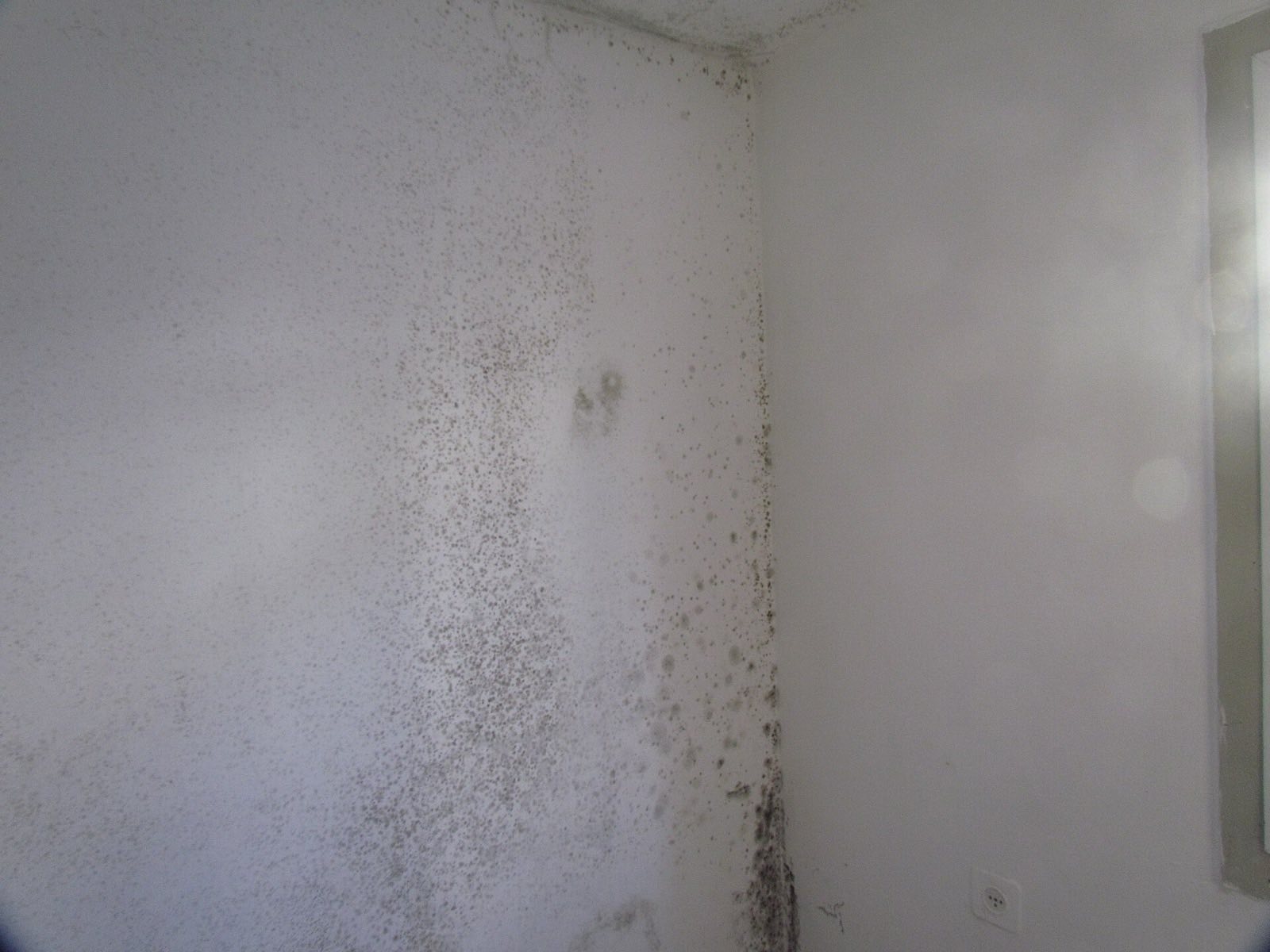
When mold does become visible, it shows up in a range of colors and textures. People often picture only “black mold,” but mold can appear:
- Black — common on drywall, grout, and wood.
- Green — often on walls, fabrics, and food.
- White or gray — sometimes powdery or fuzzy, easy to mistake for dust or efflorescence.
- Orange, pink, or purple — frequent in bathrooms and on damp surfaces.
Texture varies too: fuzzy, slimy, powdery, or velvety. Don’t try to identify a “type” of mold by color — the EPA notes that you don’t need to know the species, because all indoor mold growth should be cleaned up the same way. What matters is that it’s there.
Check the usual hiding spots: behind and under furniture, inside closets, beneath sinks, around windows, on baseboards, and along the bottom edge of walls where floodwater sat.
Sign 3: Stains and discoloration
Water stains and discoloration are both evidence of past moisture and a warning that mold may be developing where the water sat. Look for:
- Yellow, brown, or copper-colored water stains on ceilings and walls.
- Dark or greenish patches that spread or darken over time.
- Discoloration that bleeds through paint or wallpaper from inside the wall.
A stain that keeps growing or changing is especially concerning — it means moisture is still present and active. Even a dry, old-looking stain marks a spot where materials were wet long enough to potentially support mold inside.
Sign 4: Warping, peeling, and bubbling
As materials absorb and hold moisture, they physically change shape — and those changes are reliable indirect signs of trapped water and likely mold:
- Peeling, cracking, or bubbling paint and wallpaper — moisture behind the surface breaks the bond.
- Warped, buckling, or cupping floors — wood and laminate swell when wet.
- Bulging, soft, or sagging drywall — saturated gypsum loses its structure.
- Swollen baseboards and door trim.
Press gently on suspicious drywall — if it feels soft, spongy, or crumbly, the material is wet or has been, and mold is a real possibility inside. These deformations often appear before visible surface mold, making them an early warning. The structural side of this is covered in how to dry out a flooded house, where reaching trapped moisture is the whole challenge.
Source: EPA — Mold Cleanup in Your HomeSign 5: Health symptoms
Sometimes your body notices mold before you do. The CDC lists symptoms that mold exposure can cause:
- Nasal stuffiness and runny nose
- Coughing, wheezing, and throat irritation
- Itchy or watering eyes
- Skin irritation
- Worsening asthma or allergy symptoms
The most telling pattern is symptoms that appear or worsen indoors and ease when you leave the house. That timing points toward something in the home’s air. People with asthma, allergies, or weakened immune systems can react more strongly, and the CDC notes more serious reactions are possible in sensitive individuals.
Health symptoms alone don’t confirm mold, but combined with a musty smell or visible signs, they strengthen the case considerably — and they’re a reason not to wait.
Source: CDC — Mold and Your HealthHow to find hidden mold behind walls
Hidden mold is the hardest and most important kind to catch. The wall surface can look perfectly normal while mold grows inside the cavity, fed by moisture that wicked in during the flood. Here’s how to investigate when the signs point to something unseen:
- Follow the smell to the area where the musty odor is strongest.
- Look for indirect signs — staining, peeling paint, bubbling, or soft spots in that area.
- Check the back of walls behind furniture, inside closets, and behind wallpaper.
- Inspect near the source of the flooding — the low edge of walls, around plumbing, under flooring.
- Use a moisture meter to find lingering dampness in walls and floors; wet material is where mold grows.
If signs strongly suggest hidden mold, the wall cavity may need to be opened to inspect it — but this should be done carefully, with protective equipment, because disturbing mold releases spores into the air.
Mold signs versus other water damage
Not every stain or smell is mold, and it helps to tell them apart:
| What you notice | Likely mold? | Other possibility |
|---|---|---|
| Musty, earthy smell | Yes, strong sign | Stagnant water, sewer gas |
| Black spots on grout | Often | Soap scum, mildew (a surface mold) |
| White fuzzy crystals on basement walls | Sometimes | Efflorescence (mineral salts, not mold) |
| Yellow-brown ceiling stain | Possible if still damp | Old, dried water stain |
| Symptoms that ease outdoors | Suggestive | Seasonal allergies, dust |
Efflorescence — a white, powdery, crystalline deposit on concrete and masonry — is frequently mistaken for mold. It’s mineral salt left by evaporating water, and it brushes off as a dry powder rather than smearing. When you’re genuinely unsure, treat it as mold until proven otherwise, since the cost of being cautious is low.
When to test or call a professional
The EPA’s position is practical: if you can see or smell mold, you generally don’t need to pay for testing first — you have a problem to clean up regardless of the species. Testing makes more sense when:
- You smell mold but can’t find it and need to locate hidden growth.
- The affected area is large (the EPA suggests professional help for areas larger than about 10 square feet).
- Someone in the home has a health condition that makes confirmation important.
- You need documentation for an insurance claim — see how to document flood damage for insurance.
For widespread mold, contaminated (Category 3) floodwater, or growth inside walls and HVAC systems, professional remediation is the right call. The line between a manageable DIY cleanup and a job that needs help is in DIY vs. professional water cleanup, and the prevention steps that keep mold from starting in the first place are in how to prevent mold after water damage.