Safety & Health
Storm & Hurricane Flooding: How to Prepare Your Home
How to prepare your home for flooding before a storm hits: sandbags, flood barriers, utility shutoffs, document protection, and a room-by-room checklist.
Reviewed against current FEMA, Ready.gov and NWS guidance.
Preparing your home for flooding means acting before the water arrives, not after — because once a storm warning is issued, the window to sandbag, shut off utilities, and protect valuables shrinks to hours. This checklist walks through exactly what to do, in order: assess your risk, protect the structure, secure utilities and valuables, and pack a go-bag. It’s part of our flood safety hub.
Know your flood risk before the storm season starts
Preparation starts with knowing what you’re preparing for. Look up your property on FEMA’s Flood Map Service Center to check your flood zone — a home in a high-risk A or V zone needs a more aggressive plan than one in a low-risk zone, though both can flood. Sign up for your county’s emergency alert system and the National Weather Service’s flood warnings for your area, since a flood watch means conditions are possible while a flood warning means flooding is happening or imminent.
Source: National Weather Service — Flood SafetySeasonal home maintenance that reduces flood risk
Before any storm is on the radar, these routine tasks meaningfully cut how much water reaches your home:
- Clean gutters and downspouts so rainwater is carried away from the foundation instead of pooling against it.
- Extend downspouts at least 5–10 feet from the foundation.
- Grade soil away from the house — the ground within 6–10 feet of your foundation should slope downward away from the structure.
- Seal foundation cracks with hydraulic cement or masonry sealant before they become entry points.
- Test your sump pump and install a battery backup, since power often fails during the storms that cause flooding.
- Clear storm drains and culverts near your property of leaves and debris.
Sandbags and flood barriers: how to protect entry points
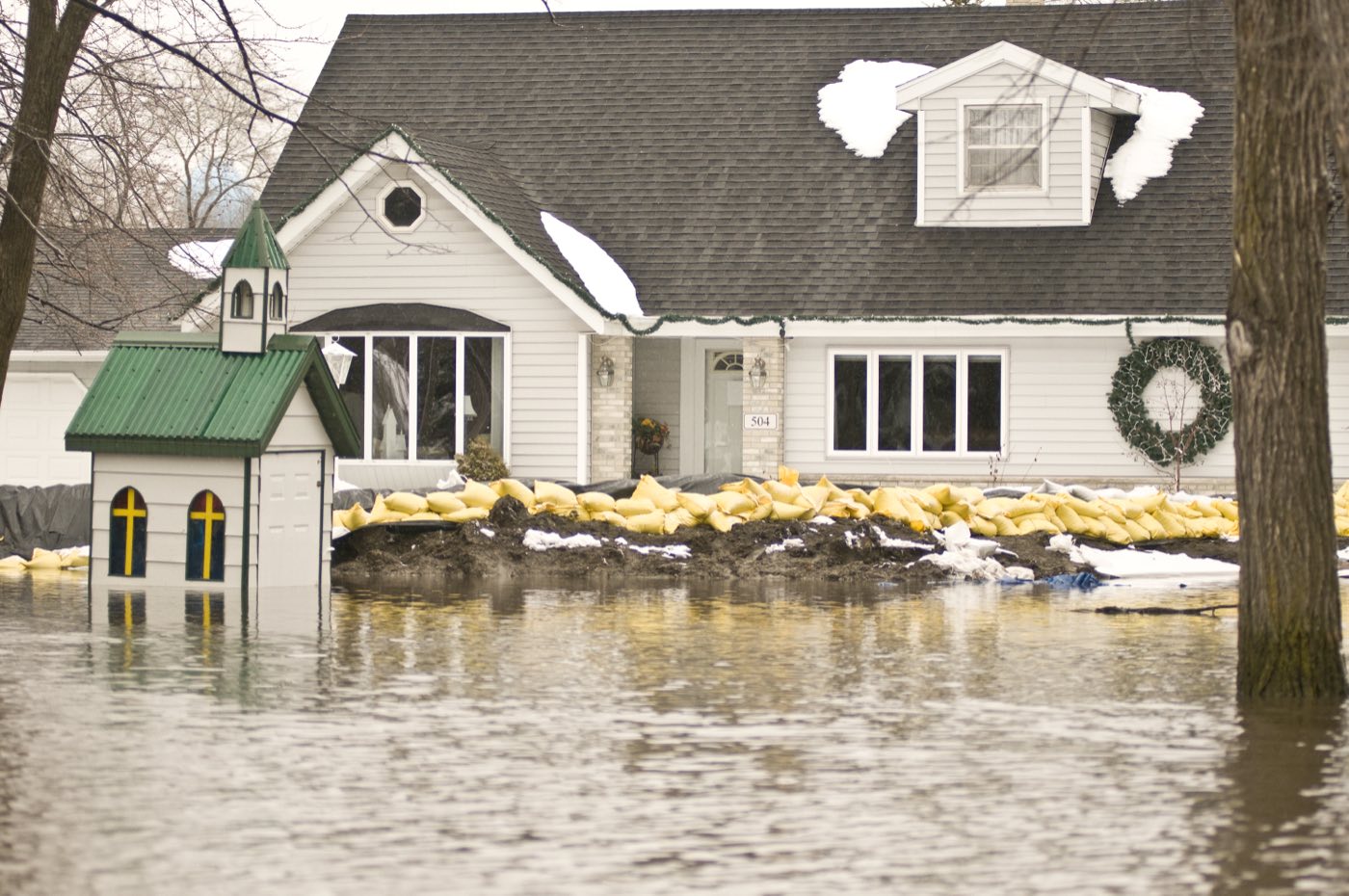
Sandbags remain the most accessible flood barrier for homeowners, but they only work if placed correctly and early.
How to fill and stack sandbags
- Fill bags about half full — roughly 25–30 pounds of sand each. An overfilled bag won’t seal against its neighbors.
- Fold the top over rather than tying it; a folded bag seats flatter and stacks tighter.
- Lay the first row lengthwise, perpendicular to the direction water is expected to flow, with the folded end facing upstream.
- Stagger each row like bricklaying so seams don’t line up, and stamp down each bag to remove air gaps.
- Angle the wall slightly toward the water source for stability, and taper the top narrower than the base.
As a rough planning number, about 100 sandbags build a wall roughly 1 foot high and 20 feet long — most homes don’t need a full perimeter, just coverage at doorways, garage entrances, and low window wells where water will enter first.
Reusable flood barrier alternatives
For homes in recurring flood areas, several reusable options exist beyond sandbags:
| Barrier type | Best for | Reusable? |
|---|---|---|
| Sandbags | One-time or infrequent events, any doorway/opening | No — dispose after contact with floodwater |
| Water-filled flood tubes | Repeat use, driveways and garage doors | Yes — drain and store |
| Panel/plate flood barriers | Permanent door/window openings, higher risk homes | Yes — reinstall each event |
| Self-rising flood barriers | Basement stairwells, walkways | Yes — passive, requires no setup |
Extra steps when a hurricane or named storm is approaching
Hurricanes and tropical storms bring flooding alongside high wind, which adds prep steps beyond the sandbag-and-shutoff basics above:
- Trim trees and remove dead limbs well before storm season — a falling branch that punctures the roof turns a flood problem into a structural one, and can let wind-driven rain in even if floodwater never reaches the house.
- Secure or bring in outdoor furniture, grills, and potted plants. Anything loose becomes a projectile in sustained wind and can also block storm drains once it’s blown into the yard.
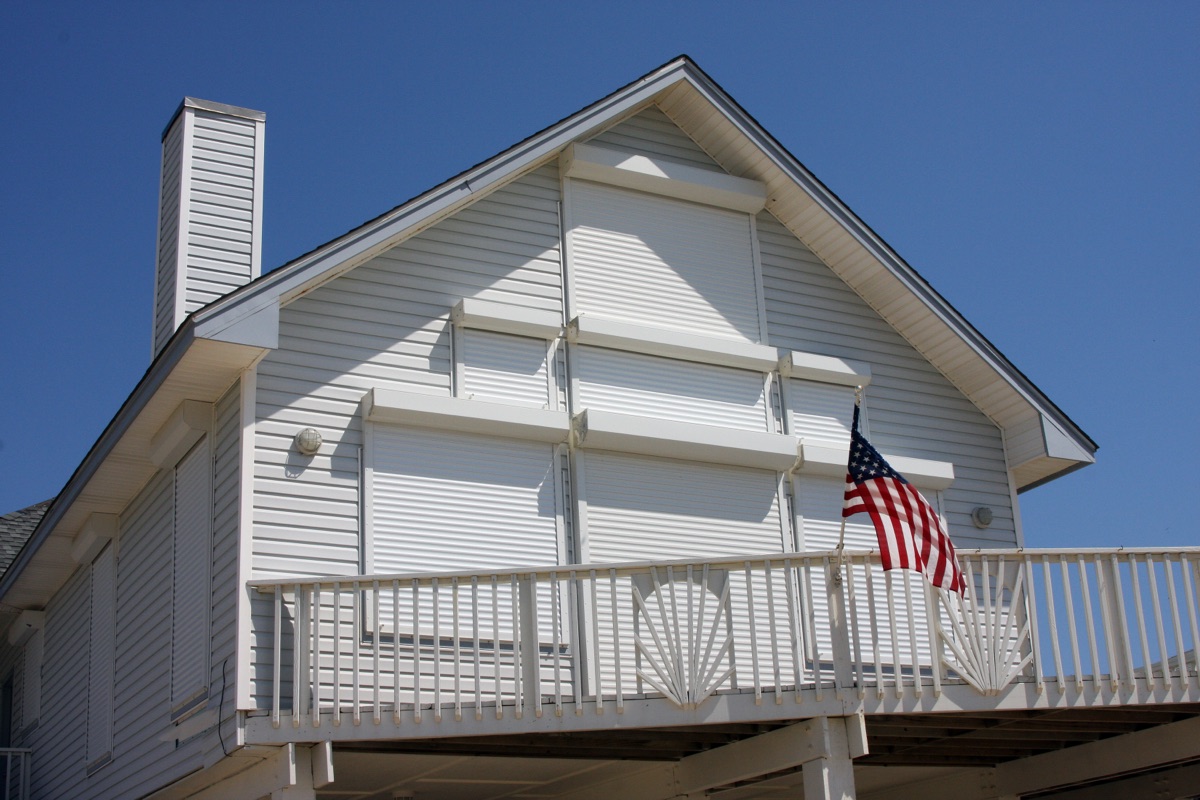
- Install storm shutters or board windows with 5/8-inch plywood if you’re in a hurricane-prone coastal area — wind-driven debris breaking a window lets water in fast, even upstairs.
- Reinforce the garage door, often the weakest point on a home’s exterior in high wind; a failed garage door can pressurize and damage the whole roof structure.
- Fuel your vehicle and fill portable gas cans for a generator before the storm, since gas stations lose power and run out fast once a hurricane warning is issued.
- Know your evacuation route and zone. Coastal and low-lying areas often have official evacuation zones separate from flood zones — check your county emergency management site, since storm surge can flood areas that never flood from rainfall alone.
Protect utilities: what to shut off and when
Knowing the location of your main shutoffs — before a flood, not during one — is one of the highest-value five minutes you can spend.
- Electricity: Locate your main breaker panel now. If floodwater is entering the home or expected to reach outlets, shut off power at the main breaker — but only if the panel is dry and reachable without stepping into water. If reaching it means walking through water, leave it and call an electrician or your utility. Full procedure in how to shut off water, gas and electricity in an emergency.
- Gas: Only shut off gas if you smell rotten eggs, hear hissing, or otherwise suspect a leak. Turning gas off unnecessarily isn’t dangerous, but restoring it safely typically requires a technician to relight pilot lights — so don’t shut it off as routine flood prep.
- Water (main valve): Turning off your main water supply is optional protection against a plumbing failure, not incoming floodwater — but it’s worth doing if you’re evacuating for more than a day, since it removes the risk of a burst pipe or failed appliance adding damage to an empty house.
Protect valuables, documents, and irreplaceable items
Structural prep protects the house; this step protects what you can’t replace.
- Gather essential documents — passports, insurance policies, deeds, birth certificates, medical records — into a waterproof container or a portable fire-and-water-resistant safe.
- Photograph your home and belongings now, room by room, for insurance purposes. This “before” record is separate from — and just as important as — the damage photos you’d take after a flood, and it’s much easier to gather calmly before a storm than to reconstruct from memory afterward.
- Move valuables and irreplaceable items upstairs or onto high shelving, especially in basements and ground floors most likely to flood first.
- Elevate or unplug electronics and appliances in flood-prone rooms, or move them off the floor onto blocks or tables.
- Back up digital copies of key documents and photos to cloud storage, which survives even if the physical originals don’t.
Build a flood emergency kit and go-bag
FEMA and the Red Cross recommend every household keep a ready-to-go emergency kit, not just for floods but for any evacuation. At minimum, pack:
- Water — one gallon per person, per day, for at least three days.
- Non-perishable food for at least three days, plus a manual can opener.
- Medications — a several-day supply of prescriptions, plus a copy of prescriptions.
- First aid kit, flashlight, and battery-powered or hand-crank radio.
- Extra batteries, phone chargers, and a portable power bank.
- Copies of important documents in a waterproof bag (see the section above).
- Cash, since ATMs and card readers may not work during a power outage.
- Change of clothes and sturdy shoes for each family member.
- Supplies for pets — food, water, medications, and carriers.
Keep the bag somewhere accessible — not in a basement that’s likely to flood — so you can grab it on short notice.
Source: Ready.gov — Build a Kit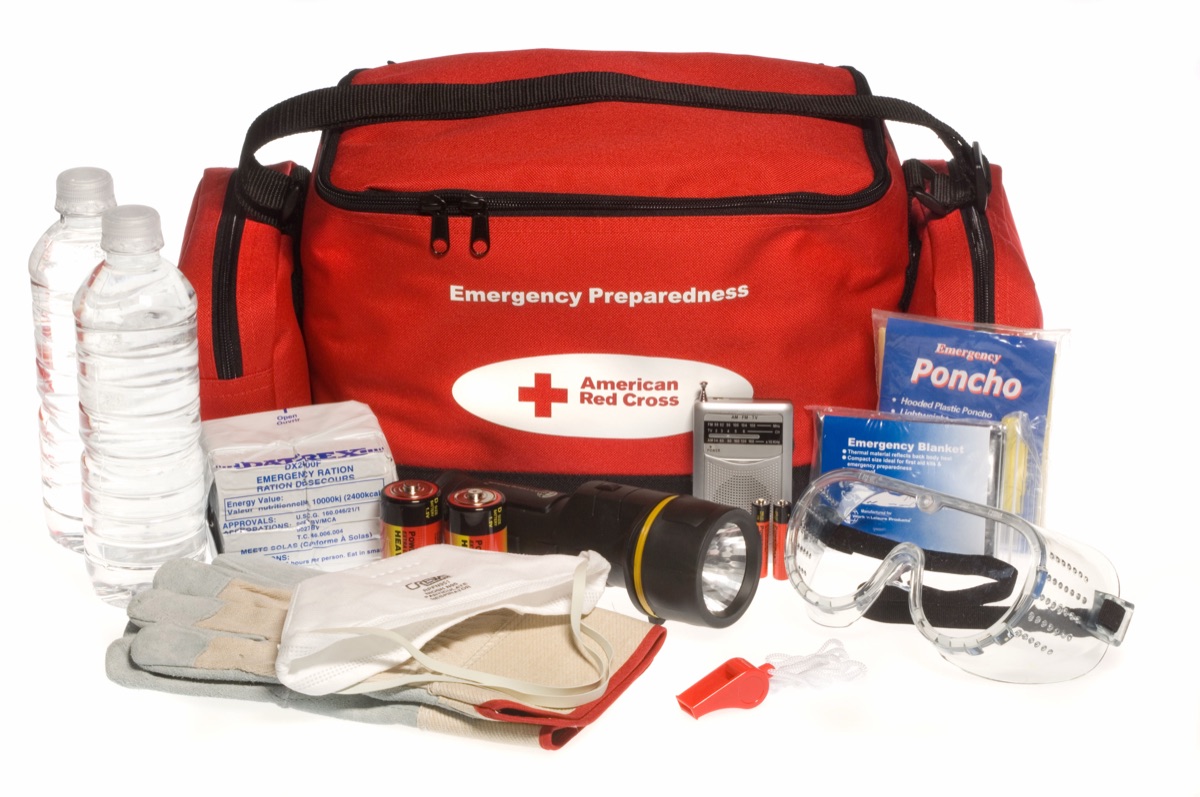
Your flood preparation checklist at a glance
- Check your flood zone and sign up for local flood alerts.
- Clean gutters, extend downspouts, and grade soil away from the foundation.
- Test your sump pump and add a battery backup.
- Stock sandbags or reusable flood barriers before a warning is issued.
- Fill and stack sandbags at doors, garage entrances, and low window wells.
- Know the location of your electrical, gas, and water shutoffs.
- Shut off electricity at the breaker if water is entering — only if safe to reach.
- Gather and waterproof essential documents; photograph your home for insurance.
- Move valuables, electronics, and appliances above the expected water line.
- Pack a three-day emergency go-bag and keep it accessible.
- Confirm your flood insurance policy is active — not applied for the week of the storm.
When preparation isn’t enough
Even a well-prepared home can take on water in a severe flood. If that happens, your next steps are covered in the first 24 hours after a flood — securing people first, then stopping the water, then documenting damage before cleanup begins. If local officials issue an evacuation order, follow it; a prepared house is easier to recover than a life is to replace.
Source: Ready.gov — Floods