Safety & Health
Generator Safety: Carbon Monoxide & Flood Hazards
Generator safety and carbon monoxide: how far to place a portable generator, why CO kills, and how to run one safely during a power outage or flood.
Reviewed against current U.S. CPSC, CDC, FEMA/Ready.gov and OSHA generator-safety guidance.
Generator safety comes down to one threat above all others: carbon monoxide. A portable generator is a small gasoline engine, and that engine pours out carbon monoxide (CO) — an invisible, odorless gas that a single generator can produce at the rate of hundreds of cars. People die every year not from the flood or the outage, but from running the generator in the wrong place. Get the placement, the wiring, and the wet-weather handling right and a generator is a lifeline; get them wrong and it’s lethal. This guide is part of our flood safety hub.
Why is carbon monoxide from a generator so dangerous?
Carbon monoxide is the number-one killer associated with generators, and it earns that ranking because you cannot detect it with your senses. CO has no color and no smell. It does not sting your eyes or make you cough. It simply displaces oxygen in your blood, and the first symptoms — headache, dizziness, nausea, weakness, confusion — are easy to mistake for the flu or for exhaustion after a long outage.
The output is staggering. The U.S. Consumer Product Safety Commission notes that a single portable generator can produce as much carbon monoxide as hundreds of cars. That much CO inside or beside a home reaches deadly concentrations fast — sometimes in minutes — and people who fall asleep or pass out from it never wake up.
That is why every federal authority gives the same instruction with no exceptions: a generator’s engine must run outdoors and far from the building, never in any enclosed or partly enclosed space. There is no ventilation trick, no cracked window, and no fan that makes an indoor or garage location safe.
Source: CDC — Carbon Monoxide PoisoningHow far from the house should a generator be?
Place a portable generator outdoors only, at least 20 feet from the house, with the engine exhaust directed away from the home and away from any door, window, vent, or air intake. Twenty feet is the distance that keeps exhaust from drifting back inside through openings and gaps.
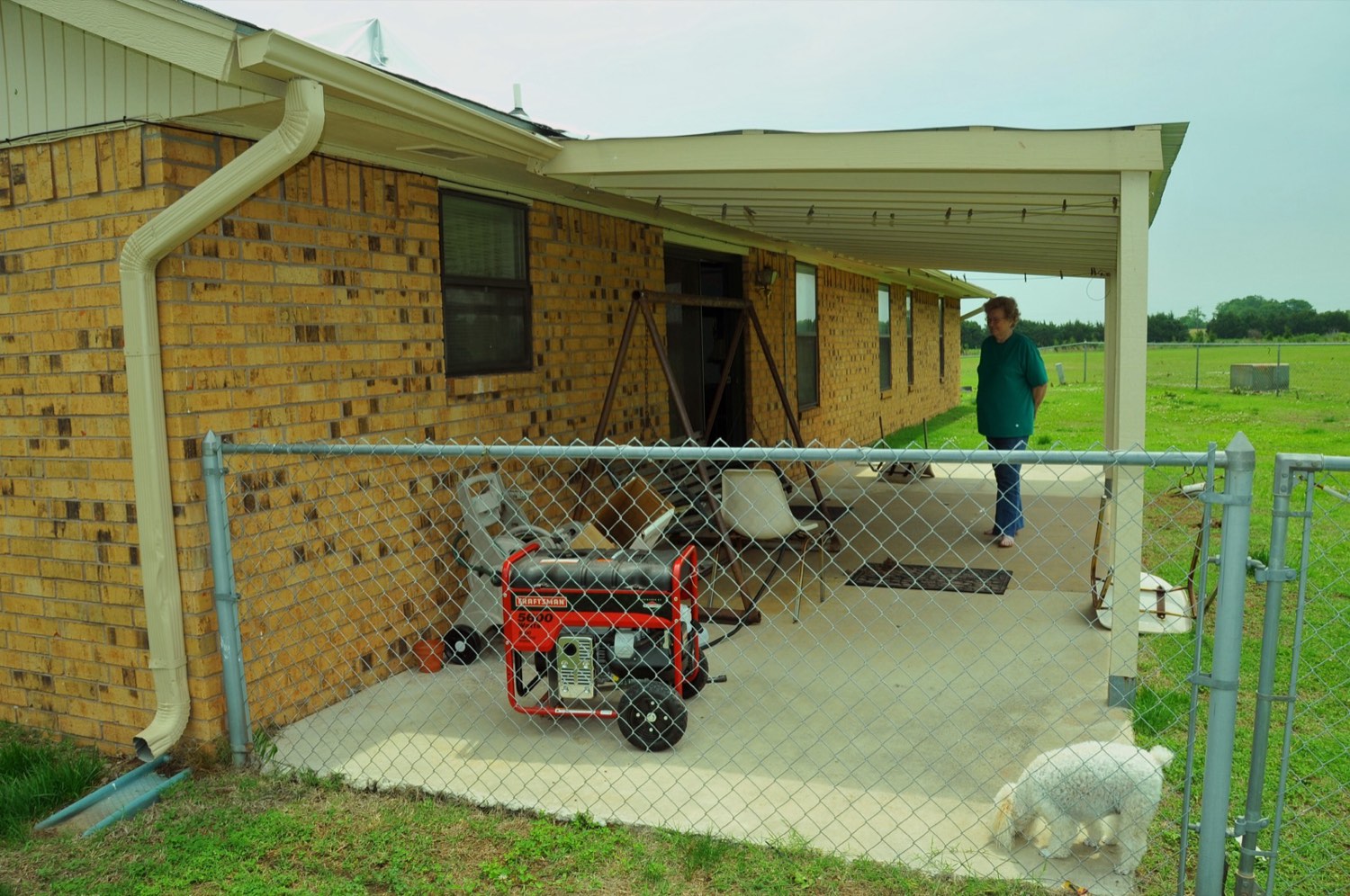
The deadly mistake is treating “outside-ish” as good enough. An attached garage with the door rolled up, a covered porch, a carport, a basement walk-out, or a spot tucked right beside an open window are all unsafe — CO pools in those areas and seeps into living space. Distance and open air are what protect you, not a partial roof.
| Placement | Safe? | Why |
|---|---|---|
| Open yard, 20+ ft out, exhaust aimed away | ✅ Safe | CO disperses into open air before it reaches the house |
| Garage — door open | ❌ Deadly | CO accumulates in the garage and migrates indoors |
| Basement, crawlspace, or shed | ❌ Deadly | Enclosed space traps CO at lethal levels |
| Covered porch / carport against the house | ❌ Deadly | Roof + nearby openings let CO drift inside |
| Right outside an open window or vent | ❌ Deadly | Exhaust is pulled straight back into the home |
Here is the 20-foot rule as a quick visual — the generator sits well clear of the house with its exhaust pointed the other way:
Install CO alarms — and know the warning signs
Because you can’t sense carbon monoxide, a working CO alarm is your only early warning. Install battery-operated or battery-backup CO alarms on every level of the home and near sleeping areas, and test them before storm season so they’re ready when the power is out.
If a CO alarm sounds, or if anyone in the house starts feeling unwell while the generator is running, treat it as a real emergency:
- Get everyone to fresh air outdoors immediately — don’t stop to find the source.
- Call 911 once you’re outside.
- Do not re-enter until emergency responders say it’s safe.
Can you run a generator in the rain or a flood?
A generator and water are a dangerous mix, which makes floods and storms — exactly when you need backup power — the riskiest time to run one. Never operate a generator in rain, standing water, or wet conditions, and never touch it with wet hands. Moisture on or inside an energized generator is an electrocution hazard.
Keep it dry without trapping the exhaust. Operate the generator on a dry surface, under an open canopy-type cover — a structure that blocks falling rain but is open on the sides so the engine’s exhaust still disperses freely outdoors. A fully enclosed tent or box defeats the purpose and turns it back into a CO trap.
There’s a direct flood-specific rule too: a generator that has been flooded or submerged must not be started. Floodwater leaves silt, corrosion, and moisture inside the engine and the electrical components. Have a qualified technician inspect and service it before it runs again — the same logic that governs every flooded appliance after a flood.
What is backfeeding and why is it deadly?
Backfeeding is plugging a generator into a wall outlet to push power into the home’s circuits through that receptacle. It feels clever — one cord and the whole house has lights. It is also one of the deadliest mistakes you can make with a generator, and it’s never acceptable.
Backfeeding bypasses the home’s circuit protection and sends current backward through the meter onto the utility lines. That can electrocute utility line workers who believe the lines are dead, endanger neighbors served by the same transformer, and overload the home’s wiring into a fire. Power must flow out of a generator through proper connections — never in through an outlet.
There are exactly two safe ways to use a portable generator’s power:
- Plug appliances directly into the generator using heavy-duty, outdoor-rated extension cords sized for the load — running each cord from the unit to the device you want to power.
- Have a licensed electrician install a manual transfer switch or interlock that safely connects the generator to your panel and isolates your home from the utility grid before you backfeed anything.
Fuel, fire, and not overloading the generator
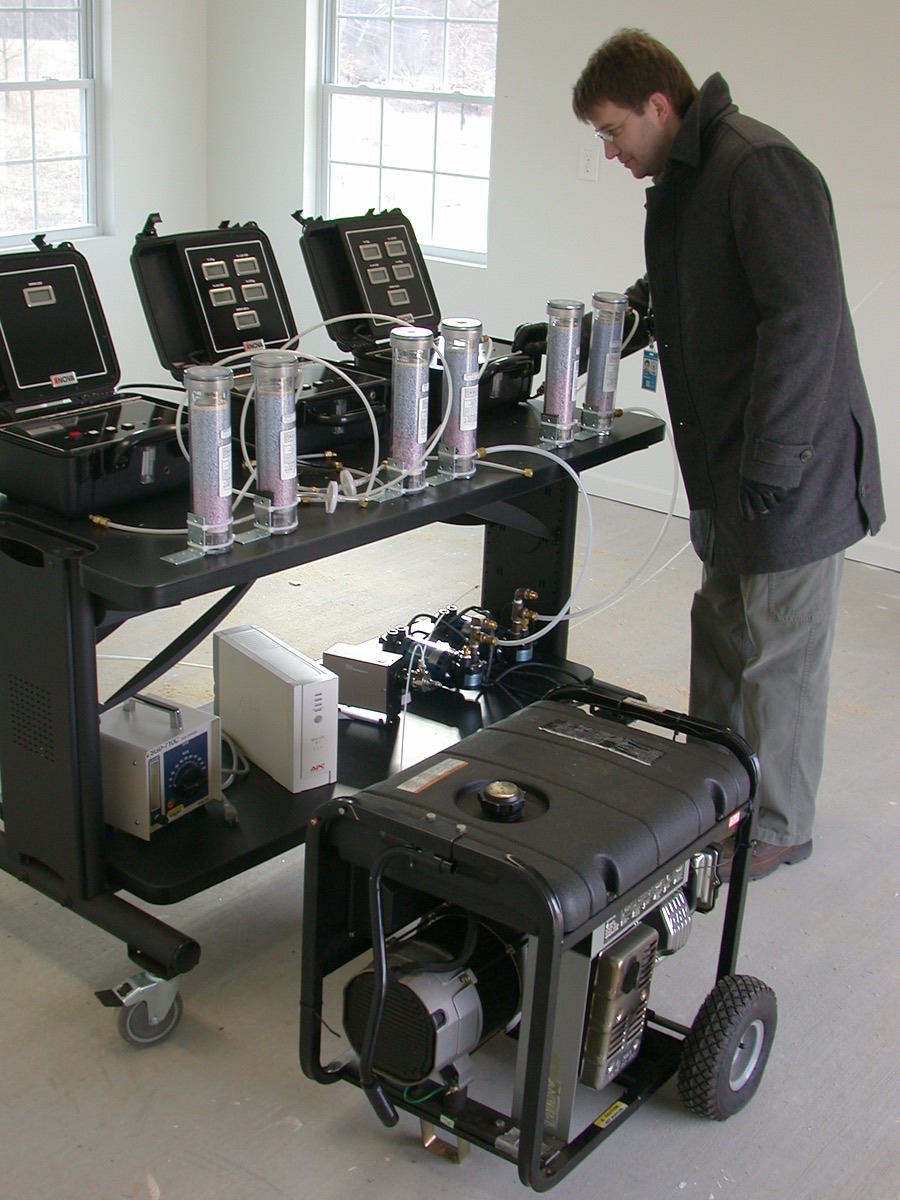
The engine that makes carbon monoxide also runs hot and burns gasoline, so the fire risks deserve their own rules:
- Let the generator cool before refueling. Gasoline spilled onto a hot engine or exhaust can ignite. Shut it off, give it a few minutes, then refuel.
- Store fuel safely. Keep gasoline in approved, labeled containers, away from living areas and away from any ignition source — a furnace, water heater, pilot light, or the running generator itself. Never store fuel indoors.
- Don’t overload it. Add up the wattage of what you’re powering and stay within the generator’s rated capacity. Overloading overheats cords and the unit, and can damage what’s plugged in. Prioritize essentials — refrigeration, medical devices, a few lights — over everything at once.
Set it up before the storm
The fatal errors almost always happen in the panic of an outage — most often, dragging the generator into the garage to keep it dry or to stop it being stolen, then running it there. You avoid that trap by deciding everything before the lights go out, when you can think clearly.
Stage these ahead of storm or flood season:
- A transfer switch or interlock, installed by a licensed electrician, if you want to power household circuits — arrange this well in advance, not during the emergency.
- Heavy-duty, outdoor-rated extension cords long enough to reach from a safe 20-foot placement to the appliances you’ll run.
- Battery-operated CO alarms on every level, tested and with fresh batteries.
- Approved fuel containers with the right amount of fresh gasoline, stored safely away from the house.
- A planned outdoor spot — 20+ feet out, on a dry surface, with a way to keep rain off while staying open to the air.
When the power actually goes, your decisions are already made: the generator goes to its spot outside, the cords run to your essentials, the CO alarms are armed, and nothing ever gets plugged into a wall. For the wider sequence of what to do when water and power fail together, see the first 24 hours after a flood and how to shut off your utilities in an emergency.
The bottom line
A generator doesn’t have to be dangerous, but it punishes shortcuts harder than almost anything else in a flooded or powerless home. The hazards that kill — carbon monoxide, electrocution in wet conditions, backfeeding onto the grid, a fuel fire — are all preventable with a handful of non-negotiable rules: run it far outside, keep it dry, wire it properly, and refuel it cold. Decide all of that before the storm, install CO alarms while you still have power, and you turn a lethal machine into the lifeline it’s meant to be.
Source: OSHA — Flood Cleanup Hazards