Cleanup & Drying
Water Under Hardwood Floor: How to Dry It Before It Cups
Water under a hardwood floor causes cupping and must be dried within 24–48 hours to limit warping and mold. How to pull moisture out with dehumidifiers and floor-drying mats, whether cupped boards flatten on their own, and how to know when the wood and subfloor are truly dry before refinishing.
Reviewed against current EPA, IICRC S500 and wood-flooring industry guidance.
Water under a hardwood floor is a race against the wood itself. As the planks absorb moisture from below they begin to cup — and if you don’t dry them fast, cupping turns to buckling, and mold takes hold in the subfloor. You generally have 24–48 hours to start. The tools are dehumidifiers and floor-drying mats; cupped boards may take weeks to flatten, and the wood must reach roughly 6–9% moisture content before refinishing. This guide is part of our water damage cleanup hub.
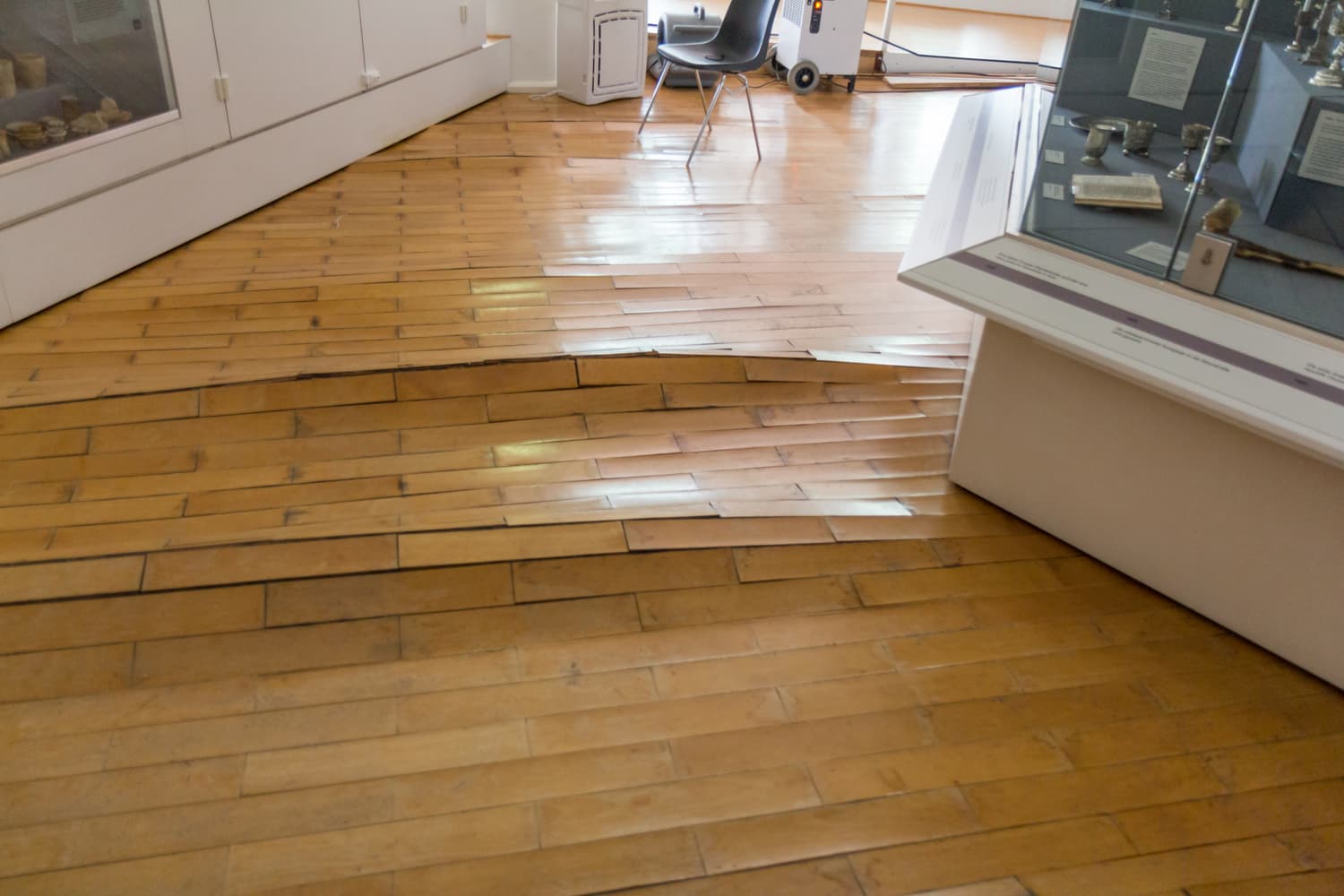
Wood moves with moisture. When water sits under or soaks into a hardwood floor, the planks swell — and because the underside usually wets first, the edges rise relative to the center. That’s cupping, and it’s the early, often reversible stage. Wait too long and the floor buckles or crowns, which usually isn’t. Speed is everything here.
How to get water out from under hardwood
The water you can see on top is the easy part. The damage is the moisture trapped under and inside the boards and down in the subfloor — and ordinary surface drying won’t reach it.
- Remove any standing water immediately with a wet/dry vacuum. See how to remove standing water.
- Set up dehumidifiers to pull moisture out of the air and, by extension, out of the wood. Keep the room closed so they’re conditioning the affected space.
- Use floor-drying mats if you can get them — these specialized mats sit on the floor and use suction to draw water up through the planks and out, which is far faster than waiting for it to evaporate on its own. Restoration pros rely on them for exactly this.
- Add air movers across the surface to speed evaporation.
- Dry the subfloor, not just the boards. Water that reached the subfloor underneath has to come out too, or it keeps re-wetting the wood and feeds mold.
- Run everything around the clock and measure progress with a moisture meter.
The reason for the 24–48 hour urgency is the same one that governs every wet material: the EPA’s mold guidance says mold begins to grow within that window. Trapped moisture under a dense hardwood floor is a near-perfect mold incubator if it lingers.
Source: EPA — Mold Course, Chapter 4Will cupped hardwood flatten on its own?
Often, yes — if you dry it slowly and completely.
Cupping is a moisture imbalance: the bottom of each board has absorbed more water than the top, so it swells and the edges rise. As the whole board dries evenly back toward its normal moisture content, mild cupping can flatten out over weeks to months. Patience is the tool.
The catch is that drying must be slow and even. If you blast the surface dry while the underside is still wet, you create the reverse defect — crowning, where the center rises above the edges — and that often requires sanding. Wagner Meters and other wood-flooring authorities note that cupped wood can take weeks to recover and may still need a re-sand to finish flat.
What won’t self-correct: buckling (boards lifting off the subfloor), crowning, and boards that have split or pulled loose. Those are repair-or-replace situations.
| Condition | Likely outcome | Action | Timeline |
|---|---|---|---|
| Caught < 24h, clean water | Often fully savable | Extract + dry fast | Days to ~2 weeks |
| Cupping, clean water | May flatten | Slow, even drying; possible re-sand | Weeks to months |
| Buckling or crowning | Usually replace affected boards | Remove, dry subfloor, reinstall | Weeks+ |
| Subfloor still wet | Don’t relay yet | Dry subfloor to baseline first | Until meter agrees |
| Cat-3 contaminated water | Usually replace | Remove wood + decontaminate | — |
How long to dry after water damage?
Plan for the long haul. Solid hardwood is one of the slowest materials in the house to dry.
Even with dehumidifiers and floor-drying mats, saturated solid hardwood can take one to several weeks to return to its normal moisture content, and cupped boards may need additional weeks to flatten after that. This is consistent with the broader drying picture in how long water damage takes to dry — surfaces dry in days; dense wood takes weeks.
The target is a specific number, not a feeling. Wood is ready to refinish when it reads near its normal moisture content — generally around 6 to 9 percent for interior hardwood — and matches the unaffected boards. Until then, keep equipment running.
Source: Wagner Meters — Wood Moisture InfoCan it be saved or replaced?
The save-or-replace call comes down to water category and how far the damage went:
- Clean water, caught fast: solid hardwood dried quickly can often be saved, sometimes with a re-sand to flatten residual cupping.
- Cupping from clean water: frequently saved with slow, complete drying.
- Buckling, crowning, loose or split boards: usually replace the affected area.
- Subfloor stayed wet: the wood can’t be saved until the subfloor is dried; relaying over a wet subfloor guarantees failure and mold.
- Category 3 black water (sewage, storm floodwater) under the wood: generally forces replacement under the IICRC S500 standard, because porous wood that absorbed contaminated water can’t be reliably decontaminated.
Read the categories of water damage to place your situation, and document the damage for your claim before you remove anything.
Source: IICRC — S500 Water Damage StandardsHow to know if moisture remains
Hardwood lies about being dry — the surface can feel fine while the boards and subfloor stay wet underneath.
- Use a moisture meter, ideally a pinless meter rated for wood. Take a baseline in a dry, unaffected area, then read the previously wet boards (and the subfloor if accessible). They must match.
- Watch the telltales: continued cupping, a musty smell, dark staining, or boards that feel cool or spongy all mean moisture remains.
- Check the subfloor before relaying. University extension guidance is explicit that you should not re-install flooring until the subfloor reads fully dry — sealing in moisture is how mold grows under a brand-new floor.
If the wood won’t come down to a normal moisture reading after a couple of weeks of running equipment, or you suspect the subfloor is still wet, that’s the point to bring in a restoration professional with commercial floor-drying systems and moisture mapping.