Cleanup & Drying
How Long Does Water Damage Take to Dry? (Realistic Timelines)
How long water damage takes to dry: most homes dry structurally in 3–5 days with professional air movers and dehumidifiers, minor spills in 2–3 days, and saturated framing or hardwood in weeks. See typical dry times by scenario, plus how to know when the structure is truly dry.
Reviewed against current EPA and IICRC S500 guidance.
How long does water damage take to dry? Most homes dry out structurally in 3 to 5 days with professional air movers and dehumidifiers; a minor clean-water spill can dry in 2 to 3 days, while saturated framing or solid hardwood can take weeks. Whatever the scope, drying must begin within the 24-to-48-hour mold window. This is the timeline companion to our water damage cleanup guide.
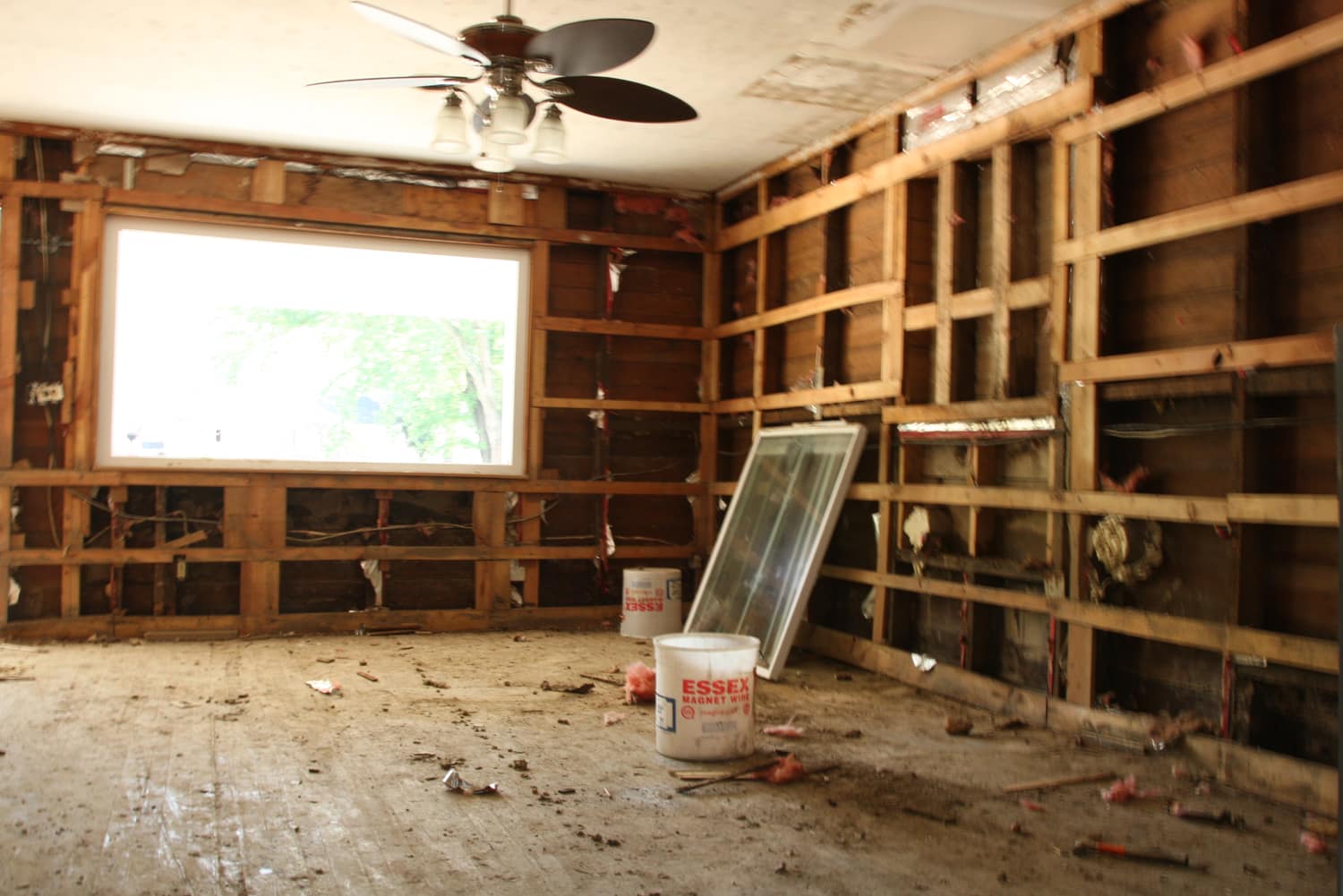
The honest answer is “it depends” — but it depends on a few specific things you can actually assess: how much water, what it soaked into, how contaminated it was, and how fast you started. Below is what each scenario realistically takes.
How long for water damage to dry out?
For an average affected area dried with professional equipment, plan on 3 to 5 days to bring the structure back to dry — that’s the working range used in the restoration industry under the IICRC S500 water damage standard (the standard itself is paywalled, but its drying-target framework is what restorers apply). Lighter, clean-water events caught immediately fall to 2 to 3 days.
What stretches the clock is dense, saturated material. Solid hardwood, thick framing lumber, and concrete release moisture slowly, so heavy saturation can mean a week or more, sometimes several weeks.
The non-negotiable part isn’t the finish line — it’s the start. The EPA’s mold guidance says to dry wet materials within 24 to 48 hours to prevent mold, because that’s when mold begins to grow. Equipment that goes in on day three is fighting mold, not just moisture.
Source: EPA — Mold Course, Chapter 4Typical dry times by scenario
Here’s how the common situations compare, by typical dry time and the equipment it takes:
| Scenario | Typical dry time | Equipment |
|---|---|---|
| Surface spill (clean water, caught fast) | 2–3 days | Fan + small dehumidifier |
| Soaked carpet + pad | 3–5 days | Air movers + dehumidifier (pad usually replaced) |
| Wet drywall cavity | 3–5 days | Air movers + dehumidifier, cavity ventilation |
| Saturated hardwood + subfloor | 1–3+ weeks | Dehumidifiers, floor-drying mats |
| Category 3 floodwater (post-removal) | 3–5 days to dry framing | Removal first, then air movers + dehumidifier |
And the same dry-time ranges as a quick visual — note how dense materials dwarf the rest:
How long should you run a dehumidifier after water damage?
Continuously — and longer than you’d guess. A dehumidifier should run 24 hours a day for the full drying period, which is usually 3 to 5 days for an average area and longer for heavy saturation.
The goal is a target relative humidity of 30 to 50 percent in the affected space; the IICRC S500 framework treats that range as the drying-environment target, and the EPA recommends keeping indoor humidity in that band to discourage mold. Pair the dehumidifier with air movers — fans create the evaporation, the dehumidifier removes the resulting moisture from the air.
The full air-mover-and-dehumidifier setup, including where to point the fans, is in how to dry out a flooded house.
How do you know when it’s fully dry?
You measure it. Surfaces feel dry long before the material inside is — the single most common reason mold shows up weeks after a flood seemed handled.
- Compare against a baseline. Take a moisture-meter reading from a dry, unaffected part of the same material, then read the previously wet area. They should match before you stop.
- For wood, aim low. Wood is generally considered dry for these purposes at roughly below 16 percent moisture content, and solid hardwood floors need to come down near their normal equilibrium (often 6–9%) before refinishing.
- For the room, watch humidity. Relative humidity holding at 30 to 50 percent signals the air is no longer being fed by wet materials.
Inexpensive moisture meters are sold at any hardware store. Until the readings agree with your baseline, the equipment stays on.
Source: Wagner Meters — Wood Moisture InfoDoes water damage dry on its own?
Surface water and trivial dampness can air-dry on their own. Anything more should not be left to chance. Without forced airflow and a dehumidifier, moisture lingers inside carpet pad, wall cavities, and subfloors well past the 24-to-48-hour mold window — and trapped water cups hardwood and feeds hidden mold while the surface looks fine.
For a small, fresh, clean-water spill, blotting plus a fan may be enough. For a soaked carpet, a wet wall, or any contaminated water, passive drying simply isn’t fast enough to beat mold. See how to get water out of carpet for the layered approach.
What if it isn’t dried in time?
Miss the window and the job changes character:
- Mold begins to grow within 24–48 hours, per the EPA, and spreads from there. Once it’s established, you’re remediating, not just drying.
- Salvageable materials become tear-outs. Carpet pad, drywall, and insulation that could have been dried often have to be removed once they’ve stayed wet too long.
- Wood warps and cups, subflooring can delaminate, and persistent moisture produces a musty smell that won’t clear until the source is fixed.
That’s why front-loading the response matters so much — the science of the mold clock is in how long it takes mold to grow, and the category rules that decide save-versus-remove are in the categories of water damage. If materials won’t return to baseline after several days of running equipment, that’s the cue to bring in a restoration professional with commercial drying and moisture-mapping tools.