Safety & Health
Is Your Ceiling Going to Collapse? Water Damage Ceiling Risk
Water damage ceiling collapse warning signs: sagging, bulging, bubbling paint, and dripping. What to do now and when to evacuate the room.
Reviewed against current OSHA, IICRC S500 and building-science guidance on saturated drywall.
A water-damaged ceiling can collapse when it sags, bulges, bubbles, or drips — those are signs the drywall or plaster has absorbed enough water to fail. There’s no safe way to predict the exact moment it falls, so treat any sagging, bulging, or actively leaking ceiling as a collapse risk: keep everyone out from underneath, stop the water source, and get the area professionally assessed before anyone re-enters.
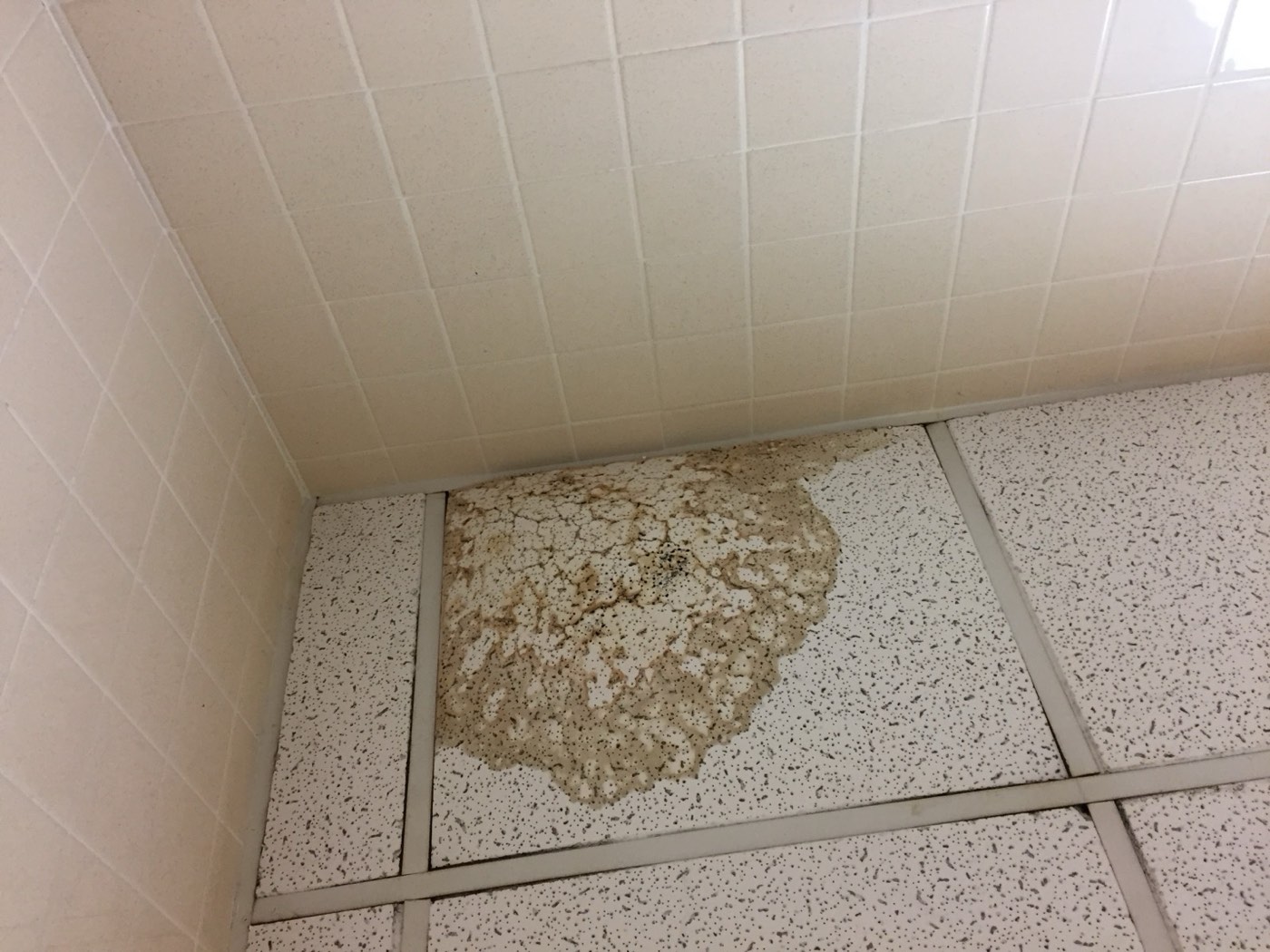
A ceiling doesn’t usually give any dramatic warning before it fails — it sags a little more each day a leak continues, until one section finally lets go. Knowing what a ceiling collapse risk actually looks like, and what to do the moment you spot it, is the difference between a contained repair and someone getting hurt.
Can water damage really cause a ceiling to collapse?
Yes. Standard drywall and plaster ceilings are not built to carry water weight. Gypsum board is essentially compressed chalk sandwiched between paper facings — it holds together because it’s dry. Water breaks down the paper-to-gypsum bond and the gypsum core itself, and a soaked section can weigh several times what it weighs dry.
That added weight has to hang from the framing above using a structure that was never designed for it. Once the wet drywall’s grip on the ceiling joists or the paper’s grip on the gypsum fails, the affected section drops — sometimes as a slow sag that finally lets go, sometimes with little warning if a large area gives way at once.
This is different from a small, old, dry stain left over from a leak that was fixed months ago. The danger is specifically in active or recent saturation — water currently in the ceiling cavity, not a faded mark from the past.
What are the warning signs a ceiling is about to collapse?
Learn to read these signs from the room below, without touching the ceiling:
- Sagging or bulging. The ceiling plane is no longer flat — it dips or balloons downward in one area. This is the clearest sign of trapped water weight.
- Bubbling or peeling paint. Paint loses its bond to wet drywall and lifts into bubbles, or peels away in sheets.
- A spreading water stain. Brown or yellow rings that grow larger or darker over hours or days mean the leak is active, not historical.
- Active dripping. Visible water coming through means the ceiling material is fully saturated and past the point of just absorbing.
- Cracks radiating from a wet spot. Cracking in the texture or drywall tape around a stained area shows the material is stressed and separating.
- A soft, spongy feel. Gently pressing a broom handle upward against the ceiling (never your hand — stay clear of the bulge itself) tells you whether the material has lost its rigidity.
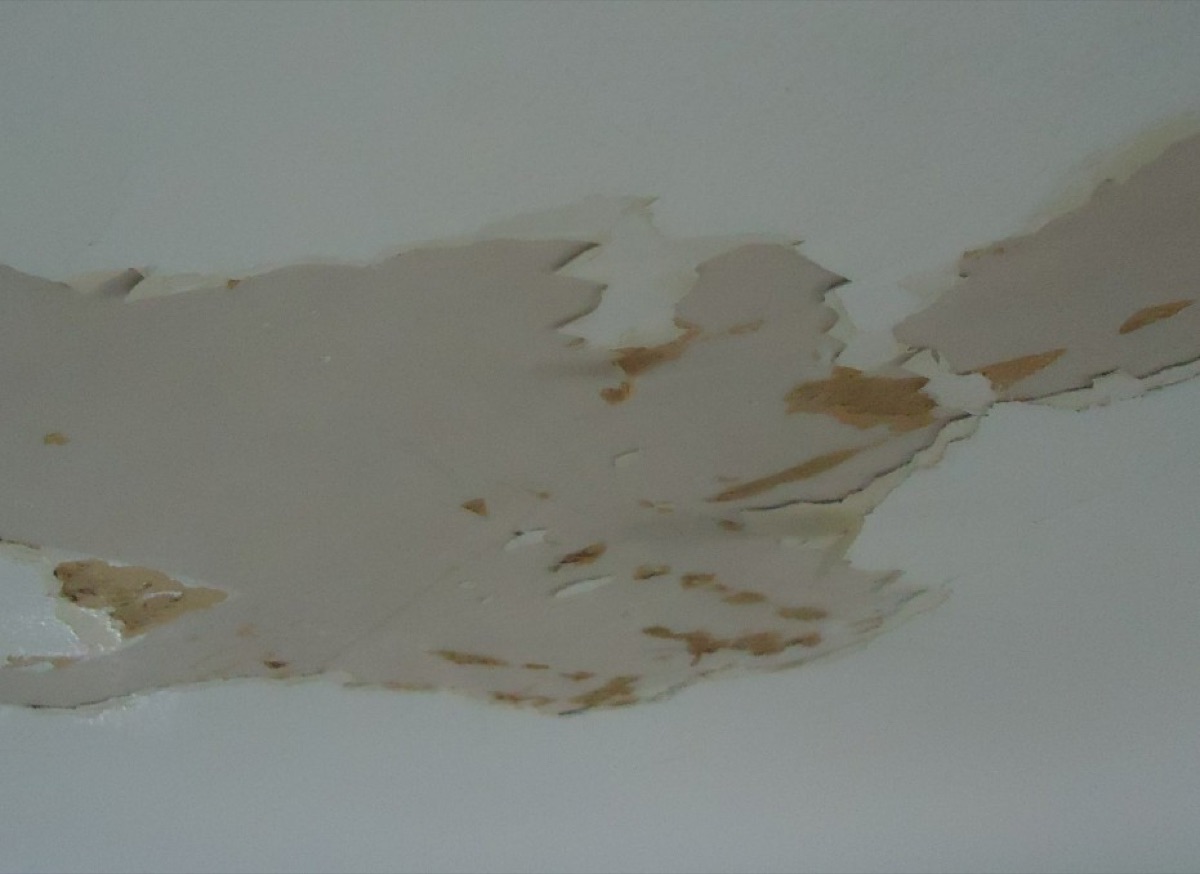
How much water does it take before a ceiling fails?
There’s no fixed threshold, because it depends on the ceiling material, how large an area is saturated, and how much water keeps arriving. A small, contained leak that’s caught quickly may only stain a foot-wide patch and never sag. A slow leak that runs for days across a wider area — from a failed roof flashing, a burst supply line in the floor above, or an overflowing tub — can saturate enough drywall that a much larger section becomes unstable.
The compounding factor is that water pools at the lowest point of a sag, so a bulge tends to grow heavier and larger the longer it’s left, not smaller. A leak that seemed minor yesterday can be a genuine collapse risk today if it’s still active.
Should you drain a bulging, water-filled ceiling yourself?
Sometimes — carefully, and only from a position where you are never standing under the bulge. Controlled drainage relieves the trapped water’s weight before it finds its own way down, which is safer than an uncontrolled collapse:
- Clear the room of anyone who isn’t doing the draining, and move furniture out from directly below.
- Place a bucket or container on the floor under the lowest point of the bulge.
- Stand to the side, not underneath, and use a screwdriver or similar tool to puncture the lowest point of the bulge from a safe angle.
- Let it drain fully before assessing the ceiling further.
What should you do immediately if you see these signs?
Work through this order:
- Stop the water source. If you know where the leak is coming from — a supply line, a roof, an upstairs bathroom — shut off that fixture’s valve or the home’s main water shutoff. See shutting off utilities in an emergency if you’re not sure where that is.
- Clear the room. Move people, pets, and anything valuable out from under the affected area.
- Contain what you can. Buckets or towels can catch minor drips once you’re confident the ceiling itself is stable enough to approach briefly.
- Photograph the damage from a safe distance for insurance purposes before any repair work starts — see how to document flood damage for what adjusters actually need.
- Call a water damage restoration professional or contractor to assess the ceiling structure before anyone treats the room as usable again.
How does a ceiling leak connect to what’s happening above it?
A collapsing ceiling is a symptom — the real problem is whatever is putting water into that cavity. Common sources include a roof leak, a burst or slowly leaking supply line, an overflowing appliance, or a bathroom above the ceiling with a failed seal around the tub or shower. Tracing and stopping that source is what actually ends the risk; draining or patching the ceiling only buys time.
If the leak came from a roof or storm event, our guide to flood structural damage covers how to check the rest of the house for related issues. If it’s a plumbing leak, a burst pipe: what to do walks through stopping the source at the pipe itself.
How does a restoration crew handle a water-damaged ceiling?
Once the source is stopped, a professional typically checks moisture levels in the ceiling material and the framing above it, removes drywall or plaster that’s saturated beyond saving, and dries the remaining structure with air movers and dehumidifiers before any rebuild starts. This matches the industry drying standard for water-damaged structures.
Source: IICRC — Water Damage Restoration StandardsRemoving the compromised section, rather than trying to dry drywall that has already lost structural integrity, is standard practice — a ceiling that sagged once has weakened material even if it doesn’t fully collapse. For OSHA’s broader guidance on general workplace and structural hazards during cleanup, see their page on struck-by and falling-object hazards.
Source: OSHA — Struck-By HazardsTrying to DIY a full ceiling tear-out over an active or recent collapse risk is a case where the DIY vs. professional water cleanup decision leans firmly toward calling someone — the hazard is overhead, not underfoot.
This guide is part of our flood safety hub. For the bigger picture of what to check and in what order after any flood or major leak, start with what to do when your house floods.
Photo: Atomicdragon136, Wikimedia Commons, CC BY 3.0.