Safety & Health
How to Spot Structural Damage After a Flood
Spot flood structural damage: the foundation cracks, settling, leaning walls and sloping floors that tell you if your house is safe to enter.
Reviewed against current FEMA/Ready.gov, CDC and ASCE guidance.
To spot flood structural damage, check the house from the outside before you go in: look for a foundation that has cracked, shifted or settled, walls that lean or bulge, soil washed out from under the footings, and a sagging roof line. Inside, watch for sloping floors, doors that suddenly stick, and new gaps where walls meet floors. Any of these means stay out and call a professional.
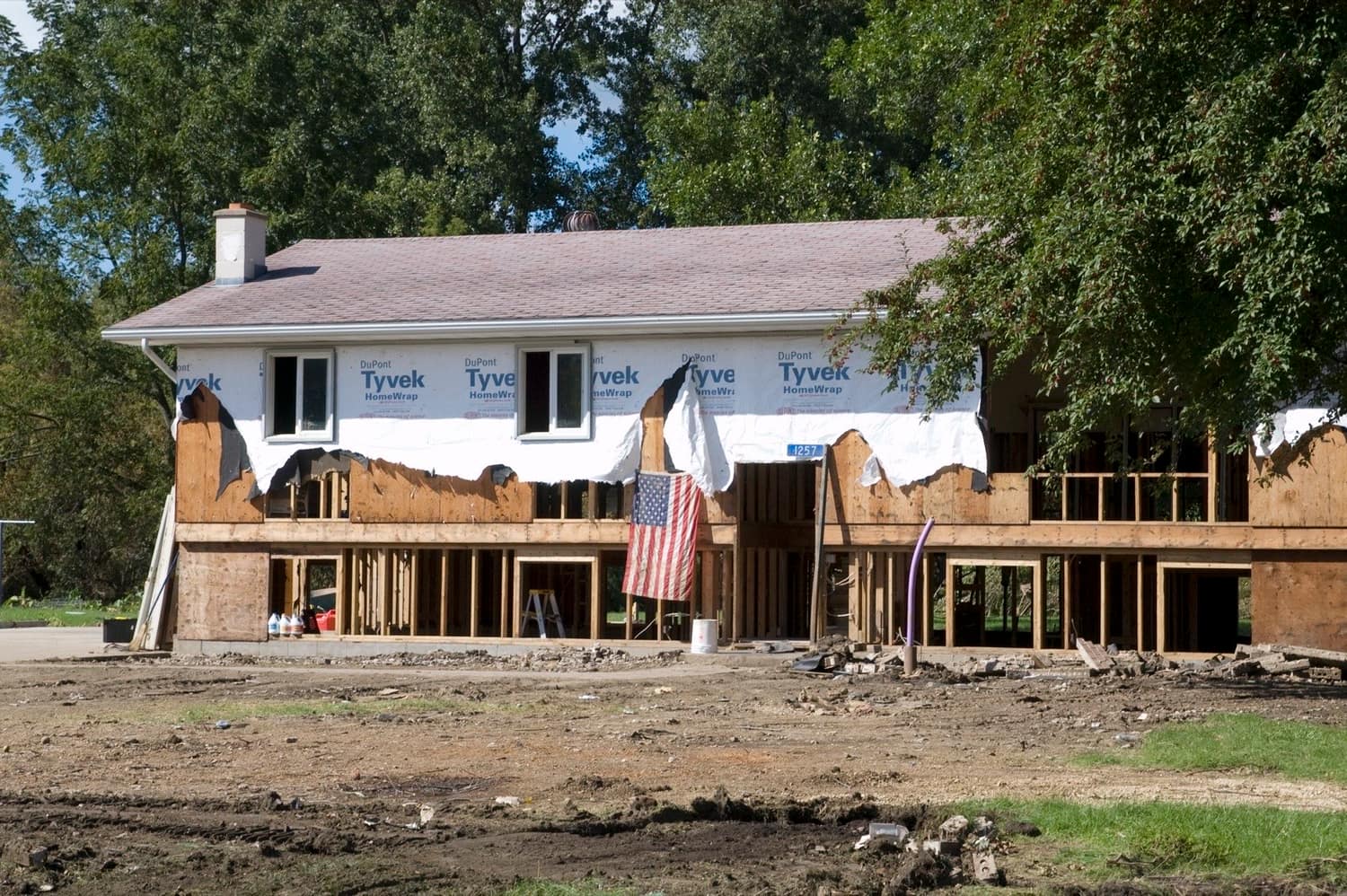
A flood can leave the framing and finishes looking almost normal while quietly wrecking the one thing holding the house up: the foundation and the soil under it. The danger is that structural damage often shows up after the water is gone — sometimes days later — as the ground dries, settles, and shifts. This guide walks through what to look for, in the order a professional checks it, so you can decide whether your house is safe before you trust it with your family.
How can you tell if your house is structurally damaged after a flood?
Start outside, before you ever open a door. The federal guidance on returning home after a flood is consistent: inspect the exterior for structural movement first, and don’t enter a building that looks shifted, leaning, or unstable.
Walk the full perimeter and look for:
- Cracks in the foundation that are new, widening, horizontal, or stair-stepped through block or brick.
- A foundation or porch that has shifted, tilted, or settled unevenly.
- Soil washed away from around the footings, or visible erosion under the house.
- Walls that lean, bulge, or bow, or that have pulled away from the framing.
- A roof line that dips or sags where it didn’t before.
Then step inside only if the outside looks sound — and keep checking. Doors and windows that suddenly stick or won’t latch, floors that slope or feel soft underfoot, and fresh gaps where the wall meets the floor or ceiling all point to a structure that has moved. Ready.gov’s flood-recovery guidance tells homeowners to stay out of any building surrounded by floodwater and to enter carefully and watch for shifting once it’s safe to approach.
Source: Ready.gov — FloodsBefore you go in for any reason, it’s worth reading our full walkthrough on whether it’s safe to stay in your house after a flood and the priorities for the first 24 hours after a flood.
What does flood water do to a foundation and structure?
Understanding the mechanism helps you know where to look. Floodwater attacks a house’s structure in four main ways, and most of them target the foundation.
- Soil erosion. Moving water scours away the soil that supports the footings. Remove the support under part of a foundation and it settles or drops — exactly what happened to the condemned home in the photo above, where floodwaters eroded the land under its foundations.
- Saturation and loss of bearing. Saturated soil loses much of its ability to carry weight. The ground softens, the foundation sinks into it, and the house can settle unevenly.
- Lateral pressure. Water and waterlogged soil push sideways against foundation walls. That pressure can crack, bow, or push in basement and crawlspace walls.
- Impact and uplift. Fast-moving water and floating debris strike the structure directly, and in some cases buoyant forces can lift or shift parts of a building.
This is why a home can pass a quick glance right after the water drops and then crack or tilt days later: the soil is still draining and resettling. Treat the days after a flood as the real inspection window, not just the hour the water leaves.
What are the signs of foundation damage after a flood?
The foundation is where flood structural damage shows up first and worst. Not every crack is a crisis, so it helps to know which ones matter.
| Sign | Usually cosmetic | Likely structural — get it checked |
|---|---|---|
| Cracks | Hairline, stable, vertical, under ¼ inch | New, widening, over ¼ inch, horizontal or stair-stepped |
| Settling | Old, even, long-standing | New, uneven, with sloping floors or sticking doors |
| Walls | Flat and plumb | Leaning, bowing, or bulging inward |
| Soil | Intact around the base | Washed out, eroded, gaps under footings |
| Floors | Level and firm | Sloping, sagging, soft, or separating from walls |
A few specifics professionals weigh heavily:
- Horizontal cracks in a basement or crawlspace wall are more concerning than vertical ones — they often mean the wall is being pushed in by soil pressure.
- Stair-step cracks through concrete block or brick mortar joints suggest differential settling.
- A gap opening up between the foundation and the framing that sits on it means the house has moved relative to its base.
When you find a crack, photograph it with a ruler or coin for scale and note the date — that record tells an engineer whether it’s growing, and it supports your insurance claim. Our guide to documenting flood damage covers how to capture this evidence properly.
Is my house structurally safe to enter after a flood?
This is the question that has to come before everything else, and the honest answer is: assume it isn’t until the structure proves it is. Three checks decide it.
- Did the structure move? Any leaning, bulging, sagging, or shifted foundation is a stop sign. Don’t enter; call a building inspector.
- Is it surrounded by or full of floodwater? Don’t wade into a building still holding water — you can’t see what failed beneath the surface, and the water is a separate hazard on its own.
- Are the utilities safe? Floodwater and electricity are a deadly mix. If there’s standing water near the panel or outlets, don’t touch anything until the power is off and the system is checked. See electrical safety after a flood and how to shut off utilities in an emergency.
The CDC’s flood-safety guidance is blunt about re-entry: stay out of buildings that are surrounded by floodwater, watch for structural damage on the way in, and treat the home as hazardous until it’s cleared.
Source: CDC — Flood SafetyWhat are the signs in walls, framing, and floors?
Once you’re safely inside, the interior tells you how far the movement traveled up from the foundation.
Walls and framing:
- Walls that lean, bow, or bulge, or that no longer meet the ceiling cleanly.
- Diagonal cracks running from the corners of doors and windows — classic signs of framing movement.
- Doors and windows that bind, stick, or won’t latch when they worked fine before — the opening has gone out of square.
- Visible separation, gaps, or nail pops where framing has shifted.
Floors:
- A floor that slopes, sags, or feels springy — drop a ball or a marble and watch which way it rolls.
- Soft or spongy spots, especially over a crawlspace, which can mean saturated or rotting joists below.
- Subfloor or finished floor buckling, cupping, or separating from the walls.
Don’t confuse swollen, warped finishes with structural failure. Soaked hardwood and laminate cup and buckle on their own, which is a finish problem, not a framing one — our guide on drying water under a hardwood floor explains that distinction. The structural red flags are movement and slope, not just water staining.
When should you call a structural engineer or building inspector?
For anything beyond a stable hairline crack, the right move is to get a professional opinion before you repair or reoccupy. Cosmetic damage you can often handle yourself; structural questions are not a DIY call. Bring in a licensed structural engineer or building inspector when you see:
- New or widening foundation cracks, horizontal cracks, or stair-step cracks in block.
- A foundation that has settled, shifted, heaved, or lost soil support.
- Leaning, bulging, or bowing walls.
- Sloping or sagging floors, or doors and windows newly out of square.
- Floodwater that was deep or fast-moving, or a building that was tagged by officials.
A structural engineer evaluates whether the home is safe to occupy and specifies what has to be repaired and how — guidance a contractor or restoration crew then follows. The American Society of Civil Engineers, the body behind the structural standards engineers use, is the professional reference point for this kind of post-disaster assessment.
Source: ASCEThe line between what you can handle and what needs a pro mirrors the broader DIY vs. professional water cleanup decision — and structural concerns land firmly on the professional side.
What you should not do until the structure is cleared
A few rules keep people safe while the structural question is still open.
- Don’t re-enter a leaning, shifted, or tagged building to grab belongings. Things are replaceable.
- Don’t start gutting or rebuilding over a foundation you haven’t had evaluated — you may be sealing damage inside a wall you’ll have to open again.
- Don’t assume “the water’s gone, so it’s fine.” Settling and cracking often appear in the days after, as the soil keeps draining.
- Don’t ignore a gas smell or downed wires — those are immediate evacuate-and-call hazards regardless of the structure.
This guide is part of our flood safety hub. For the bigger picture of what to handle and in what order, start with what to do when your house floods.
Photo: FEMA / Patsy Lynch, Wikimedia Commons, public domain.